


.jpeg)
.jpg)



Follow us on
What impact did Shein's opening at BHV Le Marais have on foot traffic?
In the week following Shein's November 5, 2025 opening at BHV Le Marais, foot traffic to the Parisian department store rose 11.8%, with an estimated 50,000 visitors arriving specifically for the new store. By December, traffic had fallen 6.5% year-on-year: more than triple the decline recorded by competitors.
The data tells a clear story: a new tenant can move foot traffic fast, and in the wrong direction just as fast. For commercial real estate professionals managing tenant mix decisions, the BHV case is worth studying in detail.
What actually happened when Shein opened at BHV Le Marais?

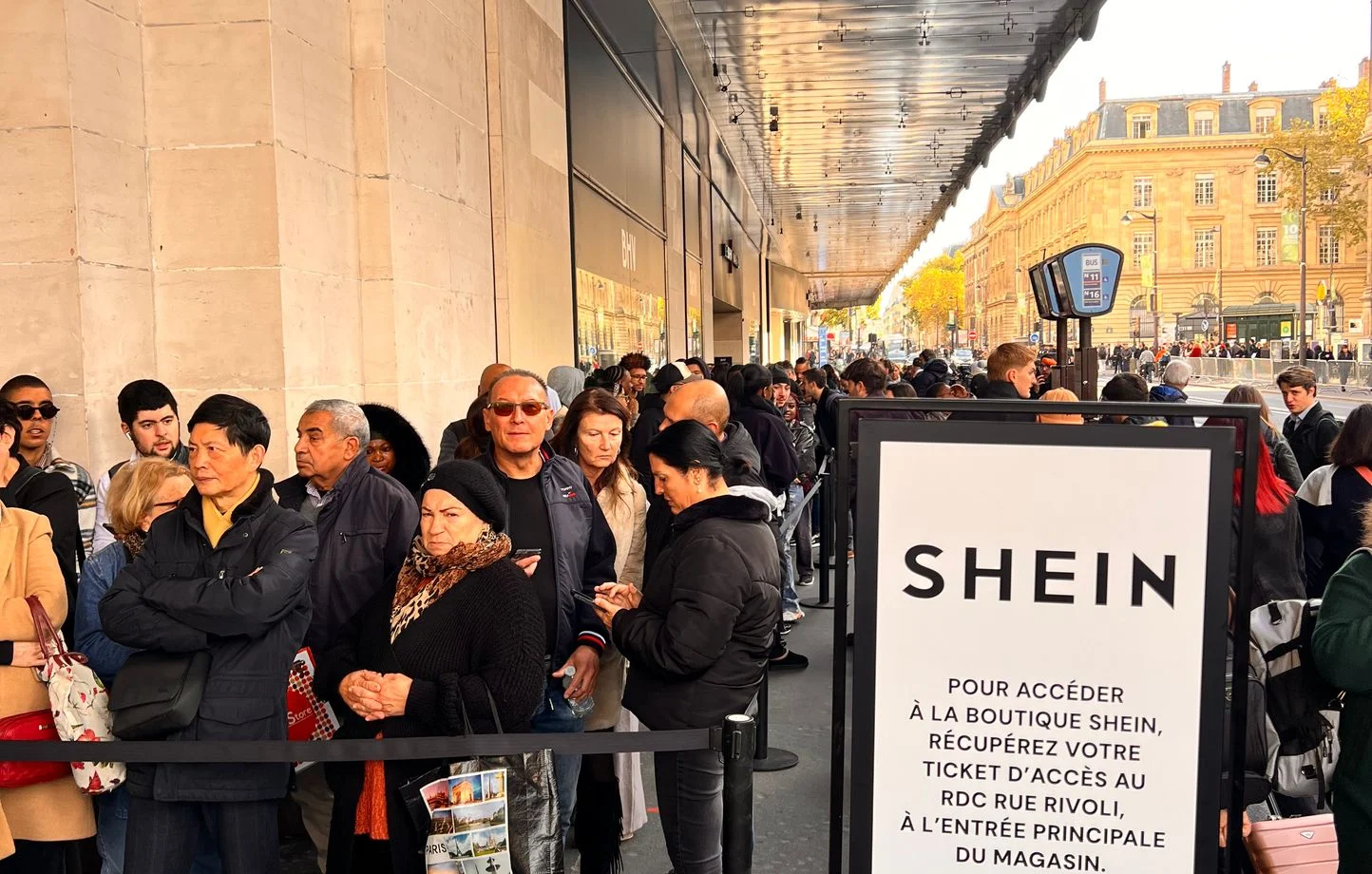
On November 5, 2025, Shein opened its first-ever permanent physical retail location worldwide inside BHV Le Marais, the Paris department store owned by Frédéric Merlin's Groupe SGM. The opening generated immediate media attention, driven partly by consumer curiosity and partly by the controversy surrounding the brand's fast fashion practices and labor conditions.
MyTraffic's pedestrian flow data, measured before, during, and after the opening, shows that the store produced a measurable short-term spike. In the week following the launch, BHV Le Marais recorded an 11.8% increase in foot traffic compared to the prior year, consistent with press estimates placing around 50,000 visitors as arriving specifically for Shein (source: CBNews). For context, the same period in 2024 had seen foot traffic fall 5.21%, making the 2025 reversal all the more striking.
That reversal, however, did not last.
How did Shein's opening change the profile of BHV's visitors?
The foot traffic increase was real. What changed alongside it, though, reveals just as much about what the Shein opening actually did to BHV as a brand.
Between October and November 2025, the average annual household income of BHV Le Marais visitors declined from €48,500 to €47,050, according to MyTraffic's sociodemographic analysis. The shift is explained by a clear change in the visitor income distribution: the share of visitors earning between €30,000 and €45,000 per year rose from 36.7% to 40.9% over the same period.
Visitors also came from further away. The proportion of people living more than 2 km from the store increased from 33.6% in October to 35.1% in November, a signal that Shein's opening expanded BHV's catchment area temporarily, drawing in visitors who would not typically consider BHV a destination. Average visit duration held steady at 35 minutes, suggesting that the new visitors, once inside, behaved similarly to the store's regular customers in terms of time spent.
Two conclusions follow from this data. First, Shein drove incremental visitors who were demographically different from BHV's existing base. Second, those visitors came once, for Shein, not for BHV.
Did the foot traffic impact last?
No. The December data is unambiguous.
Comparing December 2024 to December 2025, BHV Le Marais recorded a 6.51% decline in foot traffic. Over the same period, the store's main Parisian competitors, including Le Printemps Haussmann, Galeries Lafayette, and La Samaritaine, saw foot traffic fall by just 2.0% on average (source: MyTraffic).
The Shein opening produced a spike of around three weeks, then accelerated a decline that outpaced the broader market by more than three percentage points.
What did the revenue data tell a different story?
The foot traffic picture was bad. The revenue picture was worse.
According to trade union sources cited by Neomag (January 30, 2026), BHV Le Marais turnover by the end of 2025 would barely reach 70% of its annual targets. The average basket size reportedly fell from €65 to €43 following the Shein opening.
More visitors, lower average spend per visitor, and missed revenue targets. That combination is not a tenant mix win. It is a brand positioning problem.
Noël Zierski, former CEO of Intermarché and former executive at BNP Paribas, analyzed the decision publicly on LinkedIn and did not hold back his assessment:
"The decision to bring Shein into stores operated by Groupe SGM is proving to be a serious strategic mistake. Partner brands abandoned ship, unwilling to endorse the shift in positioning of stores hosting Shein, which created a huge gap in consumers' minds between premium and luxury brands and the 'cheap' and controversial brand that Shein represents."
Zierski's analysis goes further. He notes that the media scandal triggered by Shein's arrival at BHV Le Marais, and simultaneously at seven former Galeries Lafayette stores in regional French cities, accelerated the breakdown of the partnership between Groupe SGM and Groupe Galeries Lafayette. He also points to structural financial consequences: the Caisse des Dépôts Group, which had been expected to help Groupe SGM acquire the BHV Marais building, withdrew as soon as the Shein partnership became public.
The deal was ultimately won by Canadian fund Brookfield, which plans to convert the building's top two floors into a luxury hotel. BHV is now expected to reduce its retail floor space by 40% to bring annual rent down to approximately €9 million (source: La Lettre).
What does the Shein case tell us about tenant mix and footfall?
The BHV case is a useful correction to one of the most common assumptions in commercial real estate: that a high-profile new tenant is always good for an asset.
Research by the International Council of Shopping Centers (ICSC) consistently shows that anchor tenant decisions are among the most consequential variables in a shopping center's long-term performance, not just for foot traffic, but for the full tenant ecosystem. When a new anchor changes the perceived positioning of an asset, existing tenants reassess their own presence. Premium and mid-market brands operating in a space that now hosts a controversial fast fashion brand face a brand association problem they did not sign up for.
The BHV data illustrates exactly this dynamic. The opening attracted a new, lower-income visitor segment. Some of the premium brands that defined BHV's offer reportedly left. The visitor spike was real but temporary, and the new visitors it brought did not replace the spend generated by BHV's traditional customer base.
Three lessons emerge from this for commercial real estate teams:
Foot traffic volume and foot traffic quality are different metrics. A 12% traffic spike means little if average basket size drops 34%. The visitors who came for Shein were not the visitors who sustain BHV's economics.
Tenant mix decisions affect brand perception across the entire asset. When you bring in a tenant that sits outside your positioning, you don't just add visitors. You send a signal to every other tenant in the building, and to the customers who defined your asset's identity.
The timing of impact is not the same as the duration of impact. The opening week is the easiest moment to measure. The six-month window is where the real strategic consequences show up.
How should commercial real estate teams track the impact of tenant decisions?
The BHV analysis was built from foot traffic measurement conducted before, during, and after the opening, combined with sociodemographic visitor profiling, catchment area analysis, and competitive benchmarking. Each of those data layers tells a different part of the story. Together, they produce a complete picture of what a tenant decision actually did to an asset.
For commercial real estate teams managing assets with multiple anchors, tracking this kind of data systematically is not optional. Tenant decisions move slowly, but their effects show up in the data within weeks. Waiting for annual reports to understand what a new opening did to your visitor profile and competitive standing is too slow.
MyTraffic gives asset managers access to real-time pedestrian flow data, visitor sociodemographic profiles, catchment area mapping, and competitive benchmarking across France and eight other European countries, covering more than 10 million analyzed locations at 10-meter accuracy. If you manage a shopping center or a department store and want to understand the real impact of your current or planned tenant mix, that analysis is available before and after every decision.
Start a 14-day free trial at https://gini.myt.ai/sign-up
Frequently asked questions
How much did foot traffic increase at BHV Le Marais after the Shein opening?
In the week following Shein's November 5, 2025 opening, BHV Le Marais recorded an 11.8% increase in foot traffic compared to the same period in 2024, with approximately 50,000 visitors estimated to have come specifically for the new Shein store (sources: MyTraffic, CBNews).
Did the foot traffic increase at BHV Le Marais last after the Shein opening?
No. The initial spike was confined to approximately three weeks following the opening. By December 2025, BHV Le Marais recorded a 6.51% year-on-year decline in foot traffic, compared to a 2.0% decline for comparable Parisian department stores including Galeries Lafayette, Le Printemps Haussmann, and La Samaritaine (source: MyTraffic).
How did Shein's opening affect the visitor profile at BHV Le Marais?
Average annual household income of BHV visitors declined from €48,500 to €47,050 between October and November 2025. The share of visitors earning between €30,000 and €45,000 per year rose from 36.7% to 40.9%. The proportion of visitors traveling more than 2 km to reach the store also increased, from 33.6% to 35.1% (source: MyTraffic).
What happened to BHV Le Marais revenue after the Shein opening?
According to trade union sources reported by Neomag (January 2026), BHV Le Marais turnover by end of 2025 would reach only approximately 70% of its annual targets. Average basket size reportedly fell from €65 to €43 following the Shein opening, suggesting the new visitors generated by Shein spent significantly less than BHV's traditional customer base.
What tools can commercial real estate teams use to measure tenant impact on foot traffic?
Foot traffic analytics platforms such as MyTraffic allow asset managers to track pedestrian flow trends before and after tenant openings, analyze visitor sociodemographic profiles, map catchment area changes, and benchmark performance against competing assets. This makes it possible to measure the real impact of a tenant mix decision within weeks of an opening, rather than waiting for annual financial results.