

.jpg)
.jpeg)
.jpg)

Follow us on
In March 2025, a Prime IV Hydration & Wellness franchisee signed for 1,737 square feet at Park Plaza in Severna Park, Maryland. The unit shares a neighborhood center with a Planet Fitness, and more than 52,000 cars pass it every day on Ritchie Highway. Clients book a vitamin drip there the way they book a spin class, and many pay for it with a monthly membership.
Vitamin drips used to belong in hospital wards.
Today the IV hydration franchise is adding locations across US suburbs at a pace that looks like fast food, and its growth has little to do with medicine and a lot to do with real estate. The US market reached $1.12 billion in 2025, Prime IV opened 53 locations in a single year, and every one of those openings was a lease decision before it was a wellness decision.
Welcome to our second edition of our US Retail Observatory, a series started by Pauline Paris on what American retail is doing now and what it signals for the broader market.
How big is the US IV hydration market?
The US IV hydration therapy market generated $1.12 billion in revenue in 2025, according to Grand View Research's US IV hydration therapy market outlook. The firm estimates $1.2 billion for 2026 and forecasts $2.14 billion by 2033, a compound annual growth rate of 8.6% over that period. Energy boosters are the largest service, at 27.4% of 2025 revenue.
The leading chains are growing much faster than the market. Prime IV's systemwide revenue rose 41% in 2025, while its open locations rose by about a third, from roughly 155 to 208. Revenue per location grew by only about 5%. Almost all of Prime IV's growth came from new doors, not from clients spending more. Set against a market forecast of under 9% a year, it also suggests the big chains are taking share from independent lounges. In a category that grows by opening locations, the winners are decided by where those locations go.
IV hydration franchise leaders by unit count
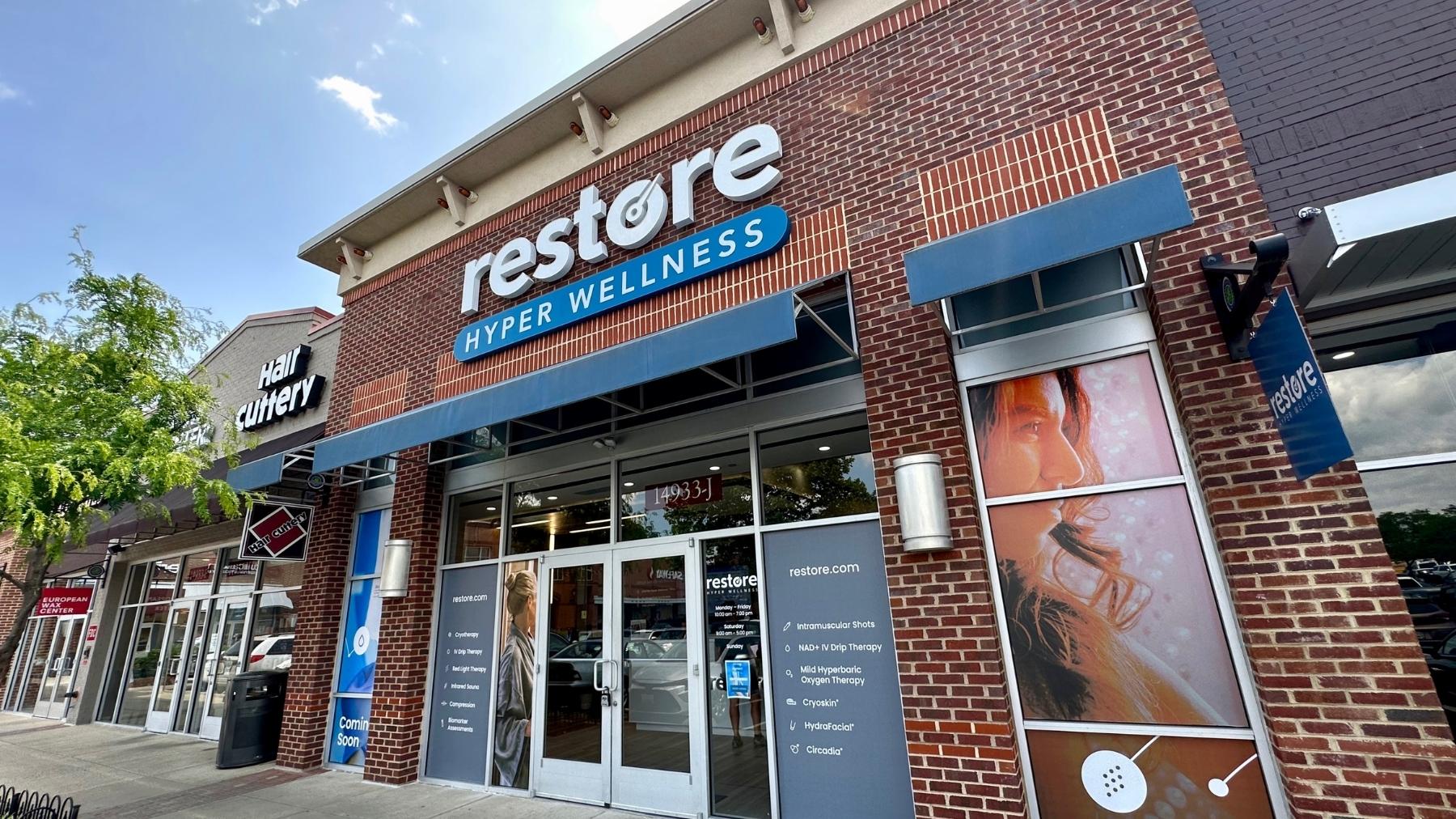
Four operators lead the US market, and each sells the same drip in a different kind of store. Restore Hyper Wellness has the most locations but has stopped adding them. 1851 Franchise counted more than 210 in August 2026, down from more than 225 in 2023. Restore sells IV drips alongside cryotherapy, red-light therapy, infrared sauna and compression, so the drip is one line on a wider menu that spreads rent across several services. That menu needs a bigger box. Restore's 2026 Franchise Disclosure Document (FDD) puts the initial investment at $762,448 to $1,236,588.
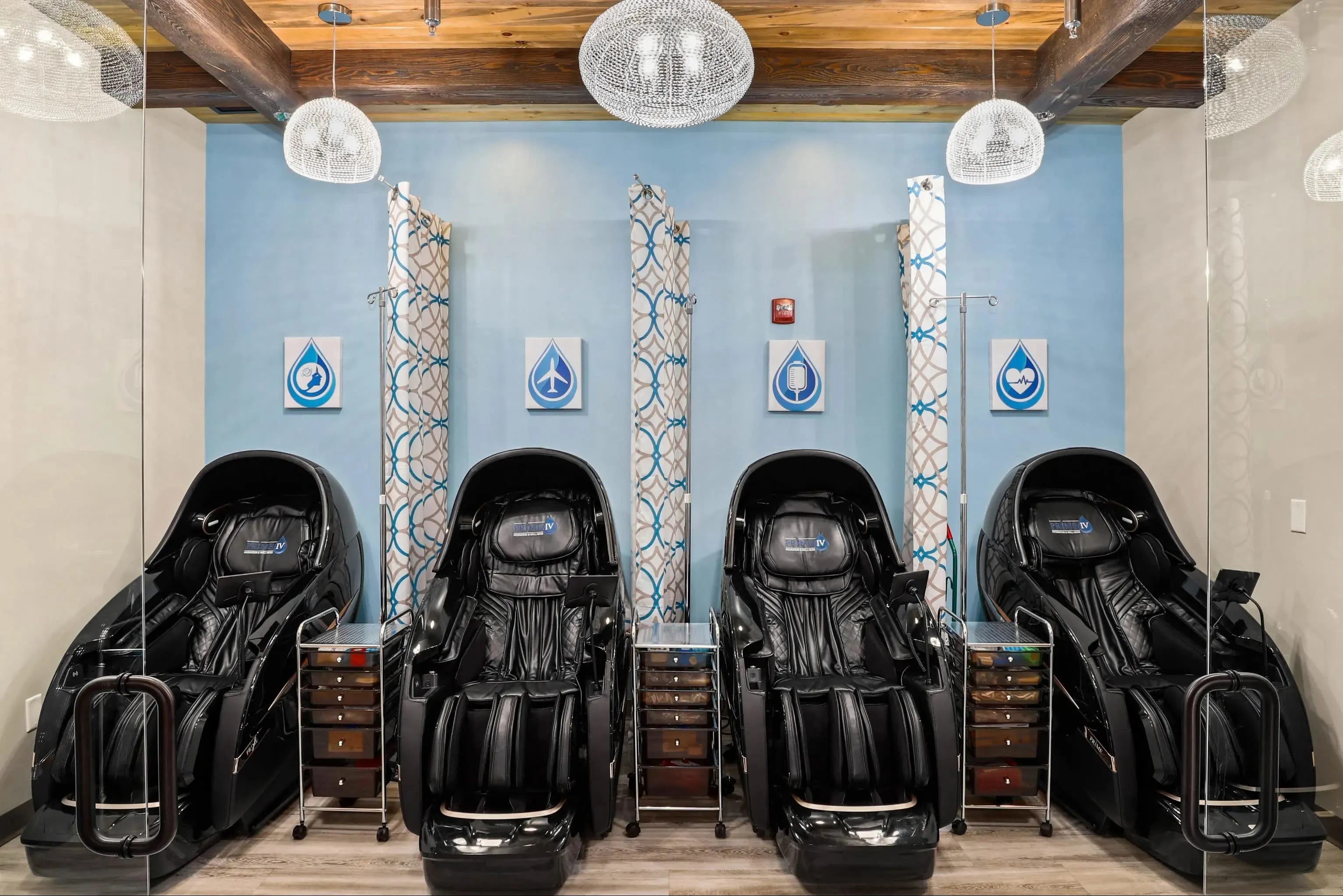
Prime IV Hydration & Wellness is a close second and still expanding quickly. According to Prime IV's 2025 year-end results, the brand opened 53 locations in 2025 and ended the year with 208 open and 324 sold across 42 states and D.C. Systemwide revenue passed $100 million. Eight locations crossed $1 million in annual revenue, and the top one generated over $3.2 million. The brand has also ranked first in Entrepreneur's IV therapy category for three consecutive years.
The DRIPBaR is the lighter-footprint franchise. Its 2026 Franchise Disclosure Document lists about 120 franchised locations, an initial investment of $135,000 to $399,500 and a standard unit of 800 to 1,200 square feet. Its "Mini" format fits into 100 to 300 square feet. That's the kind of leftover unit that's hard to lease to a conventional retailer, and it should interest landlords with awkward space to fill.

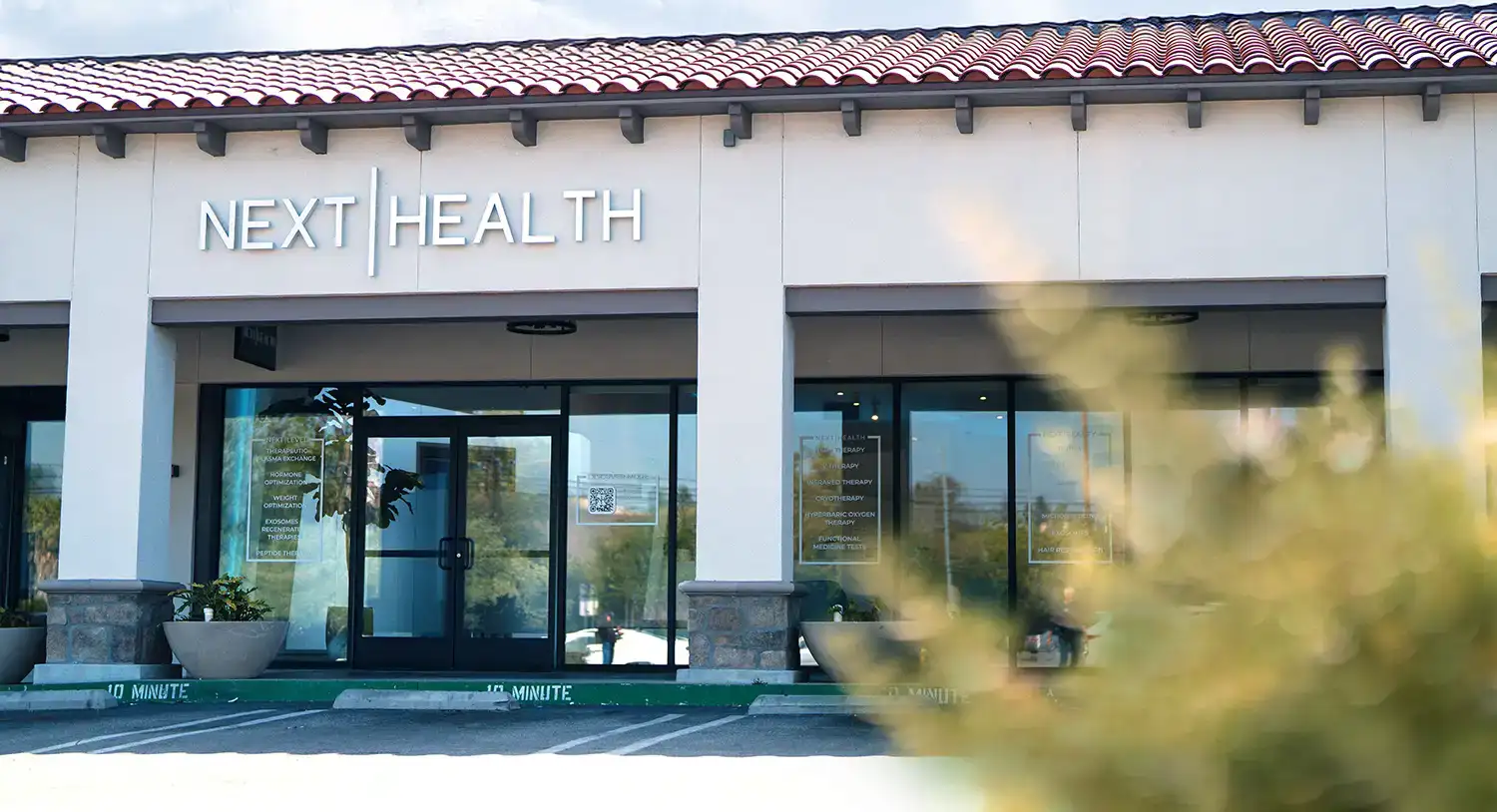
Next Health sits at the premium end. It sells IV drips inside longevity clinics, next to hyperbaric oxygen, hormone therapy and executive physicals, and it's still the smallest of the four. The Los Angeles brand had five locations at the end of 2024 and expected to open its 20th in July 2026, with 26 targeted by year-end. That's a long way from the 150-plus locations it planned for the end of 2027, a target announced after it sold 50 territories in a single month in 2024. Territories sold are not openings, and the gap between the two is the number to watch.
Why IV drip lounges run on QSR economics
An IV lounge applies the quick-service restaurant model to wellness: a small, cheap box and demand that comes back every month.
There's no kitchen, no drive-thru lane and no large stockroom. The fit-out is mostly chairs, plumbing and a treatment room. That keeps the IV therapy franchise cost for most brands in QSR territory. The DRIPBaR's initial investment runs from $135,000 to $399,500, against $263,000 to $630,000 for a traditional Subway under its 2026 FDD. Prime IV's range was $164,549 to $610,088 in its 2024 FDD. Only Restore, with its multi-service studio, starts above $750,000.
The DRIPBaR pitches the format to investors as a cash-based business. Clients pay out of pocket, so a lounge sets its own prices and sells like any retailer, with no insurer involved. Memberships then make demand recurring. Prime IV credits its 2025 growth partly to "recurring membership adoption", and Restore sells memberships across its whole menu.
Predictable revenue is what lenders and franchisees want to see before they sign.
The same traits make the format easy to franchise. A small, standard box can be copied quickly. The DRIPBaR also tells prospects they don't need a medical background to own a location, which widens the pool of buyers and lets a brand sell territories fast. Prime IV has 116 units sold but not yet open.
Revenue is capped by the number of chairs, though. A lounge only reaches the top of its range if those chairs stay full, and only the catchment can fill them. This is where the QSR comparison stops: a restaurant can turn more tables at lunch, but a lounge can't add chairs on a busy day.
Published revenue figures show the upside, but they aren't like for like. Restore's 2026 FDD reports average gross sales of $1,031,755 across 207 franchised locations open for all of 2025. The DRIPBaR's reports $791,226 per location against a midpoint investment of $267,250, before a 7% royalty and a 2% brand fund. That summary doesn't say how many locations the average covers, and the brand's 2022 FDD reported a single lounge open since 2016. Read it as a top line, not a profit or a system benchmark. Prime IV's latest public FDD figure, from 2024, is $698,937.
The spread inside one brand says more than any average. Prime IV's top location made over $3.2 million in 2025. Its system averaged roughly $480,000 per location, an estimate that runs low because 53 locations opened during the year. The box and the menu are the same across the system. The address is what changes.
The site profile that works for an IV hydration franchise
Go back to Park Plaza. It's a 183,380-square-foot neighborhood center anchored by Planet Fitness and Five Below, and its 55 tenants include medical offices and fitness retailers. The landlord, Continental Realty Corporation, called Prime IV "the perfect complement" to its Planet Fitness anchor. Each part of the deal maps to a site criterion.
The gym anchor supplies people already paying for their health several times a week. Medical and fitness co-tenants make a drip feel like an errand, not a clinical visit. Ritchie Highway puts the lounge on the commute, so an appointment fits between the office and home. And Severna Park is affluent: its median household income was $169,953 in 2024, against $99,470 for the Baltimore metro area. That suits a service clients pay for themselves. For the landlord, the lease builds a tenant mix around one customer.
The same logic shows up across the other brands. The DRIPBaR places its lounges next to complementary, high-traffic businesses such as Starbucks, Massage Envy and Orangetheory. At the premium end, Next Health opened its East Coast flagship in August 2026 at The Street Chestnut Hill, an open-air lifestyle center outside Boston. Each brand puts its lounges where affluent, health-focused people already shop and train.
Compare two hypothetical sites for the same franchise.
Site A is a downtown ground-floor unit with 20,000 daily pedestrians, mostly office workers who live elsewhere and leave in the early evening. Site B is a suburban neighborhood center with a gym anchor and fewer passers-by, but those passers-by live nearby. Household incomes there are well above the metro average, and most residents drive past twice a day. Site A has more footfall, but Site B has more of the right footfall: people who live close enough to come back every week on a membership. For a format built on recurrence, Site B is the stronger lease, and a raw footfall count would have ranked it second.
Is Europe the next market for IV hydration?
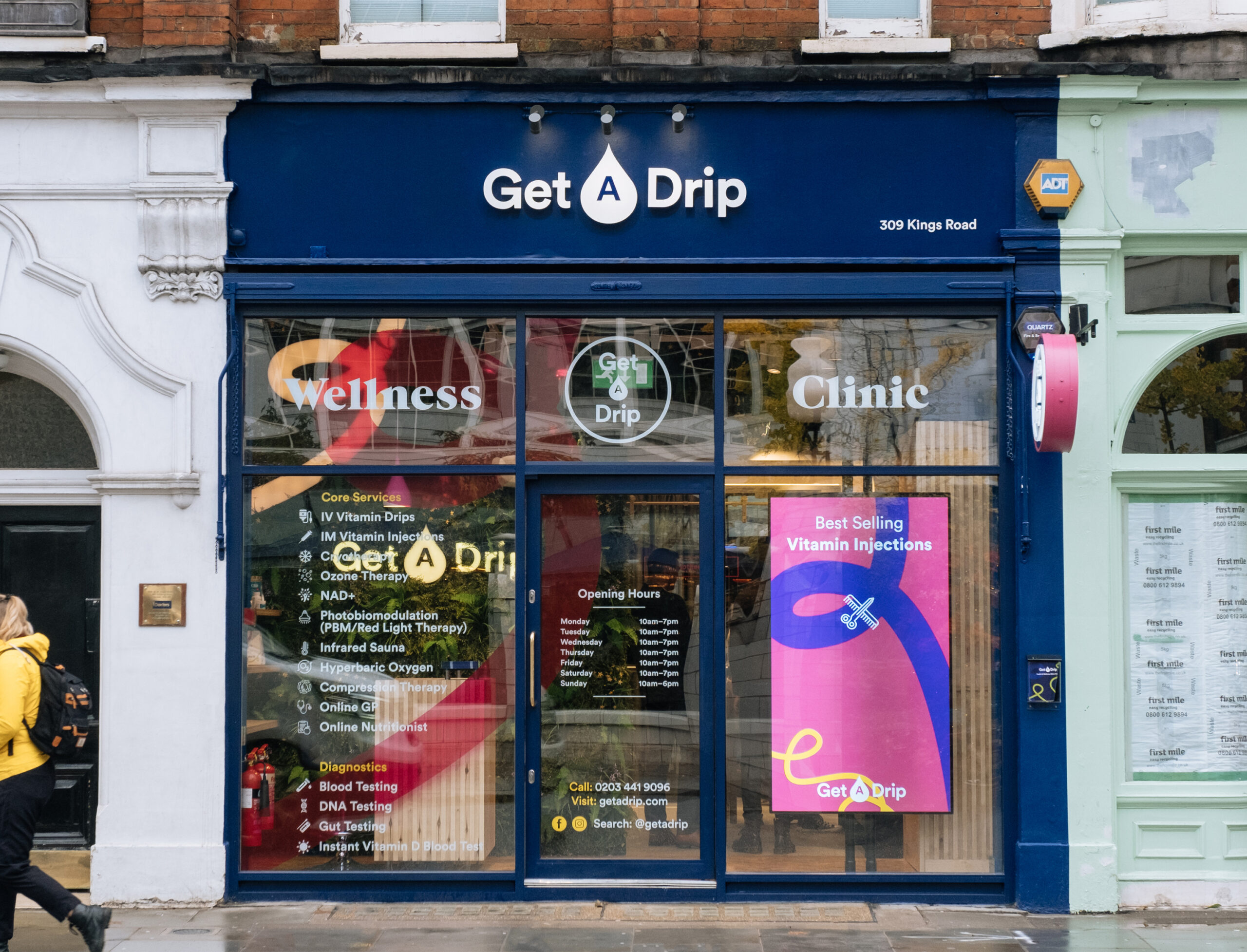
Europe has the gym chains, med-spas and affluent suburbs the US format feeds on, but far smaller networks, and two filters explain why: regulation and geography. The UK shows what a scaled attempt looks like. Get A Drip had 29 clinics across the UK and Europe in November 2023 and announced a target of 120 new clinics, starting with a flagship on Chelsea's King's Road. By 2026, its website described six clinics in London plus mobile call-out services, with a menu that now leads on blood tests, weight loss and longevity. Prime IV opened more US locations in 2025 than Get A Drip ever ran.
Regulation comes first.
In England, the Care Quality Commission treats intravenous vitamins given to improve or enhance wellbeing as treatment of a disease or disorder, so a drip clinic run by nurses or doctors must register before it opens. The regulator judges what the service does, not what it's called. In France, nurses may only put up a drip on a doctor's prescription or written protocol. A US model built on nurse-led lounges has to be checked country by country before any site search starts.
Geography is the other filter. The US model relies on car-based suburbs, whereas many European cities are denser, with more affluent households in central districts. Get A Drip's King's Road flagship shows the translation. King's Road runs through one of London's wealthiest residential districts, so the Site B logic still holds: the catchment is local, affluent and close enough to return weekly.
What to take from the US IV hydration franchise boom
In the US, the IV hydration franchise has become a real estate format. It takes units of roughly 800 to 2,500 square feet in neighborhood centers in affluent suburbs, often beside a gym. The gap between Prime IV's $480,000 system average and its $3.2 million top location shows that the address, more than the brand, decides the result. For franchisees and landlords, catchment analysis should be the first thing to do.