



.jpg)
.jpg)

Follow us on
Big Mamma has built one of Europe's most durable full-service restaurant networks by treating location not as a fixed cost, but as a strategic variable. An analysis of their 13 French restaurants shows why: 60 million pedestrians walked past a Big Mamma site in 2025, footfall around their locations dropped by nearly 12% year-on-year, and yet their restaurants kept performing. That combination is not luck. It is the result of a specific, measurable location logic that any F&B operator can study and apply.
This article breaks down exactly what that logic is, what the data shows, and what restaurant groups can do differently when choosing and evaluating sites.
What does Big Mamma's footfall data actually reveal?
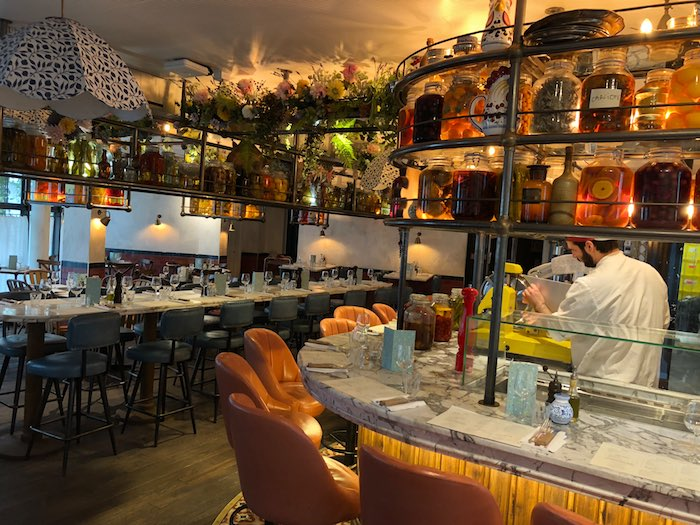
Big Mamma's 13 French restaurants generated more than 60 million pedestrian exposures in 2025, averaging 4.6 million passers-by per site. That volume of visibility is a brand-building asset most operators never measure.
Pedestrian exposure is not the same as customer visits. A person walking past a Pink Mamma on a Tuesday evening may not walk in that day. But they file the brand away. They mention it to a friend on the weekend. They search for it before a dinner booking. This is how street presence converts into reservation demand over time, and it is why high-exposure locations function differently from average ones.
The numbers from Gini by Mytraffic's analysis of the Big Mamma network make this visible. The group's French restaurants sit in zones with consistently high pedestrian density. That is not accidental. It reflects a deliberate site selection standard: locate where the brand can be seen, repeatedly, by the audience most likely to eventually book.
For F&B operators building or reviewing a network, the first question to ask about any site is not just "how many people walk past?" but "do those people return to this area regularly, and are they the right profile?" Pedestrian volume without profile alignment is noise. Volume with profile alignment is compounding brand exposure.
Why did Big Mamma's restaurants hold up when French foot traffic fell?
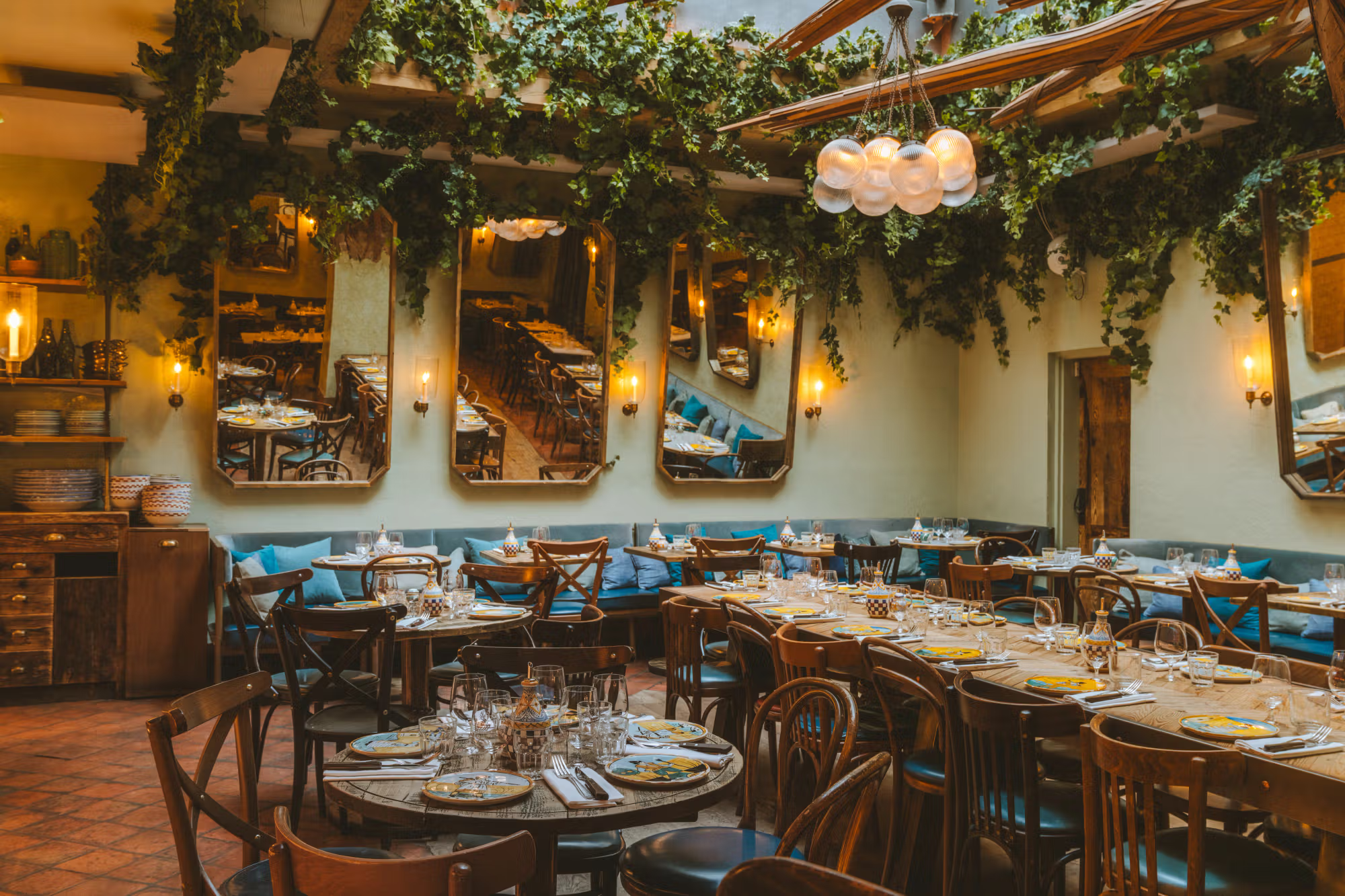
Pedestrian traffic around Big Mamma sites dropped 11.67% between 2024 and 2025. Performance held. The reason is that Big Mamma operates on reservation logic, not impulse logic, which decouples results from ambient footfall.
This is one of the most important distinctions in F&B location strategy, and one of the least discussed. There are two fundamentally different customer acquisition models in the restaurant sector:
The impulse model: the customer walks past, sees the restaurant, decides to enter. Success depends heavily on ambient foot traffic volume. When pedestrian traffic falls, covers fall with it.
The destination model: the customer decides in advance where they are going, books a table, and arrives with intent. Ambient pedestrian traffic influences brand awareness over time, but it does not directly drive covers on a given evening.
Big Mamma operates almost entirely on the destination model. Their restaurants have waitlists. Tables at Pink Mamma or Pizzeria Popolare are booked days ahead. When the number of people walking down a nearby street falls by 11%, the number of people who already have a reservation for Saturday night does not change.
This matters for site selection in two ways. First, it means that a location with slightly lower street traffic but stronger neighbourhood identity and repeat-visitor density can outperform a high-traffic location with low dwell time. Second, it means that the relevant metric for evaluating a potential Big Mamma-style site is not raw pedestrian count, but the profile and visit frequency of the surrounding population.
The broader French market context reinforces this. According to industry group UMIH, traditional French restaurants saw footfall drop an estimated 15 to 20% during summer 2024, with roughly one in five customers disappearing from dining rooms. Approximately 25 restaurants were closing every day at that pace. The operators most exposed were those built on impulse traffic. The operators most insulated were those who had built a genuine destination.
What does a Saturday peak tell you about a restaurant's strategic position?
Big Mamma restaurants recorded 31.1% more visitors on Saturdays than on weekdays. That figure is not a scheduling quirk. It is a direct readout of experiential positioning.
Weekend concentration of visits is a signature of the destination-dining category. Customers do not choose Big Mamma for a quick Tuesday lunch. They plan it: a birthday dinner, a catch-up with friends, a family meal that someone thought about and booked. The Saturday peak is the footprint of that intent.
This has concrete implications for operators evaluating or comparing sites:
Capacity planning: a restaurant with strong weekend concentration needs a different staffing and kitchen model than one with flat weekly distribution. The peak is predictable. The question is whether operations are built to capture it fully.
Location context: weekend visitors often travel further and behave differently from weekday traffic. They are less price-sensitive, more likely to order the full experience, and more likely to share on social platforms. A location that is accessible on weekends, with nearby transit and parking options, serves this pattern better than one optimised purely for lunchtime foot traffic.
Competitive framing: a site with strong Saturday performance relative to competitors in the same zone is not just doing well. It is winning the occasion. Occasion-winning restaurants are significantly more resilient to price pressure and market fluctuation.
According to research published by OpenTable in 2024, mid-week dining is rising as a separate trend, partly driven by hybrid working schedules. But for experiential full-service restaurants in the Big Mamma category, the weekend occasion remains the primary revenue engine. Operators should be building site selection criteria around that occasion, not just around generic footfall averages.
Does a broad customer age profile protect a restaurant network from downturns?
Big Mamma's visitor data shows a homogeneous distribution across age groups. No single demographic dominates. That spread is structural protection against the kind of audience erosion that cuts through narrowly positioned concepts.
Most restaurant concepts attract a primary age cohort. Fast casual skews younger. Fine dining skews older. A concept that has figured out how to be relevant to a 24-year-old on a Saturday and a 52-year-old celebrating an anniversary on the same evening has solved something genuinely difficult.
Big Mamma's mechanism is the combination of accessible Italian cuisine with an immersive, convivial environment. The food is recognizable to everyone. The atmosphere is lively enough for groups of young adults and warm enough for families. Neither dimension alienates the other audience.
For operators, this is worth examining in a specific, practical way. When reviewing a site or concept for expansion, the question is not just "who is our core customer?" but "what would stop our second and third customer segments from coming?" If the answer is "the menu is too niche" or "the atmosphere is too loud" or "the price point excludes families," those are design constraints, not just positioning choices. They have direct consequences for network resilience.
A restaurant that depends on a single customer segment is exposed when that segment's behaviour shifts. Restaurants that attract multiple distinct cohorts distribute that risk across behaviours that rarely all move in the same direction simultaneously.
How does cross-site loyalty create a compounding network effect?
Among Big Mamma's Parisian visitors, 13.1% had visited more than one restaurant in the group. That figure represents one of the most valuable, and most underestimated, metrics in multi-site F&B strategy.
A customer who has had a great experience at Pizzeria Popolare and then discovers they can have a different but equally compelling experience at BigLove is not just a repeat customer. They are a network-loyal customer. They carry brand trust across sites. They recommend both. They are less likely to be pulled away by a single competitor opening nearby, because their relationship is with the group, not just one address.
This has a direct consequence for expansion decisions. In a network with meaningful cross-site loyalty, each new opening does not just add revenue at that location. It increases the probability that existing customers across the network will visit the new site, which increases their attachment to the brand as a whole, which feeds back into retention at existing sites.
According to Deloitte's research on restaurant loyalty, brands that develop emotional engagement with customers, rather than purely transactional loyalty, see the strongest repeat visit patterns. Big Mamma's cross-site visitation data is a proxy for that emotional engagement: customers are not just returning because of a discount or a points card. They are returning because the experience was worth repeating in a different format.
For operators planning network expansion, the practical implication is that cross-site loyalty should be a deliberate design objective, not an afterthought. Do the restaurants in your network share enough brand identity that a customer at one would recognise and trust another? Are your sites located in areas that serve overlapping catchment zones, so that a customer can realistically visit two? If not, you may be building a collection of standalone restaurants rather than a network.
What can F&B operators learn from Big Mamma's approach to site selection?
Big Mamma's network performance comes down to five measurable factors: pedestrian exposure in high-identity zones, insulation from footfall volatility through reservation-led demand, occasion-based positioning with weekend concentration, intergenerational audience breadth, and cross-site loyalty that compounds with each new opening.
Here is how to apply each one operationally:
1. Measure pedestrian exposure by profile, not just volume
Raw footfall counts are a starting point, not a decision. Before signing a lease, map who is walking past, how often they return to the area, and whether their demographic profile aligns with your intended customer. A street with 3,000 daily passers-by who match your audience is more valuable than one with 10,000 who do not. Gini by Mytraffic's Data Explorer allows teams to analyse pedestrian profile data at the street level, including visit frequency and sociodemographic breakdown, for any address in the network.
2. Assess whether the site can support a destination model
Not every location can sustain reservation-led demand. Ask: is there an audience within a 20-minute travel radius that has both the profile and the habit of planning dining experiences in advance? Is there sufficient transport infrastructure for evening visits? Are there complementary activities nearby that turn a dinner into an occasion? If the answers are no, the business model needs to match the location, not fight it.
3. Map your Saturday-to-weekday visit ratio across existing sites
If you already operate multiple restaurants, calculate the weekend concentration of visits at each site. Sites with a strong Saturday peak are your destination assets. Sites with flat distribution are operating on a different model. Understanding which sites are which changes how you invest in staffing, marketing, and menu design across the network.
4. Audit your audience breadth at each site
Use visitor data to understand the age and sociodemographic spread of your actual customer base at each location. If one site skews heavily toward a single age group, examine what is driving that and whether it is a ceiling on growth. Concepts and formats that address multiple cohorts consistently outperform narrowly positioned ones during periods of demand pressure.
5. Calculate your cross-site visitation rate
If you operate more than three restaurants, you should know what percentage of your customers have visited more than one site. If you do not know this number, you do not know how effectively your network is functioning as a network. A cross-site rate above 10% is a signal that brand loyalty is transferring. Below that, each site is largely operating in isolation, which means expansion adds fixed costs without the compounding loyalty benefit.
How does Gini by Mytraffic give F&B operators access to this kind of analysis?
Gini by Mytraffic makes the location intelligence behind this type of analysis available to any F&B team, without requiring a dedicated data science function.
The analysis of Big Mamma's 13 French restaurants, covering pedestrian exposure, visit concentration, visitor profiles, and cross-site loyalty patterns, comes directly from Gini by Mytraffic's proprietary datasets. The same methodology is available through four core workflows:
Site Selector evaluates any address against your existing network performance benchmarks, using footfall, pedestrian profile, catchment analysis, and competitive context. Before committing to a new lease, you get a data-backed comparison against your best and worst performing sites.
Data Explorer lets teams interrogate any address or zone through specific datasets: pedestrian volume by time of day, sociodemographic visitor breakdown, visit frequency, seasonal variation. This is the tool for understanding whether a location has the right pedestrian profile, not just the right pedestrian count.
Expansion Planner identifies growth opportunities across a defined territory based on your criteria. For a group considering a second or fifth or twenty-seventh opening, it maps where demand exists and where your existing network does not yet reach.
Spot Finder connects directly to commercial real estate listings across Europe, filtered by footfall, traffic, demographics, and competition. It cuts the time between identifying a zone and finding an available property within it.
The result is that decisions which historically required weeks of manual research and consultant fees can now be made in hours, with the same quality of geographic and demographic granularity that Big Mamma's network performance reflects.
Frequently asked questions
What is a restaurant location strategy?
A restaurant location strategy is the framework an operator uses to select, evaluate, and prioritise sites for new openings and ongoing network management. It combines pedestrian traffic data, catchment area analysis, demographic profiling, competitive mapping, and visit pattern analysis to ensure each site is matched to the intended business model and customer base.
How does pedestrian footfall affect restaurant performance?
Pedestrian footfall affects brand visibility and impulse visits, but its impact on performance depends on the restaurant's business model. Restaurants that operate on a reservation and destination model are less exposed to short-term footfall fluctuations than those relying on walk-in traffic. The Big Mamma network saw a nearly 12% drop in pedestrian traffic around its sites in 2024-2025 with limited impact on performance, because the brand's demand is largely driven by advance bookings rather than spontaneous visits.
What is the difference between a destination restaurant and an impulse restaurant?
An impulse restaurant captures customers who decide to enter based on proximity and availability in the moment. A destination restaurant attracts customers who have already decided to visit before they arrive, typically through advance reservations. Destination restaurants are more insulated from ambient foot traffic variation but require stronger brand recognition and a compelling enough offer to motivate planned visits.
How can restaurant groups measure cross-site customer loyalty?
Cross-site loyalty is measured by analysing what proportion of customers at any one site have also visited another site in the same network. A rate above 10% typically signals that brand loyalty is transferring across locations, which is a meaningful indicator of network health. This analysis requires visitor-level data that can be matched or modelled across sites, which location intelligence tools like Gini by Mytraffic can provide.
Why does a homogeneous age audience matter for restaurant resilience?
A restaurant that draws customers from a single age cohort is exposed if that cohort changes its behaviour, faces economic pressure, or shifts its dining preferences. A restaurant that attracts multiple distinct age groups distributes that risk across behaviours that rarely move in the same direction simultaneously. Big Mamma's intergenerational audience breadth is a measurable resilience factor, not simply a brand coincidence.
How do I use location data to evaluate a new restaurant site?
Start with pedestrian volume and profile at street level, not just the zone. Then assess whether the surrounding catchment area contains enough of your target audience within a practical travel radius. Map competing restaurants within the zone and their visit patterns. Analyse the weekend-to-weekday visit concentration at comparable sites nearby. Finally, model how the new site would interact with your existing network in terms of catchment overlap and cross-site loyalty potential. Gini by Mytraffic's Site Selector and Data Explorer workflows cover each of these steps.