
.jpeg)
.jpg)
.jpg)

Follow us on
In a world where opening a store means having high fixed costs and a low margin for error, choosing your next location should be done strategically. After all, the location of your business is one of the most, if not the most important thing that determines its success.
In this article, we’ll walk you through the 5 steps necessary to make sure your next opening is a success by using robust, evidence-based insights!
1. Understand what makes a good location for your business
What makes a successful expansion decision depends on your company. Each one targets different customers, thrives in different areas, and pursues different objectives.
So how do you go about defining a successful location? Start by looking at your current stores or restaurants and what makes each of them click. By comparing sales numbers, P&L, and recent trends, you can quickly identify your top locations, as well as the mistakes you don’t want to replicate.
Things to look out for are usually the proximity to a high foot traffic area, the types of customers they attract, whether the products sold differ from other locations, etc. Each of these can help you learn meaningful insights. If you operate a coffee shop chain and you notice that the Average Cart Value (ACV) is far greater in your location near offices, then your next location should be near an office block!
If you don’t have any open stores yet, start by defining your target customer persona. Based on this, you’ll be able to estimate if you’re looking to reach your clientele during their workday, near their houses, in a trendy part of town, or out in the suburbs.
Once you’ve identified your criteria, you can visualize them easily by creating a scoring grid with each key success factor and their importance. This will help you quickly compare future potential locations!
Here’s an example of a scoring grid for a hypothetical salad bar restaurant:
2. Identify interesting locations and compare them closely
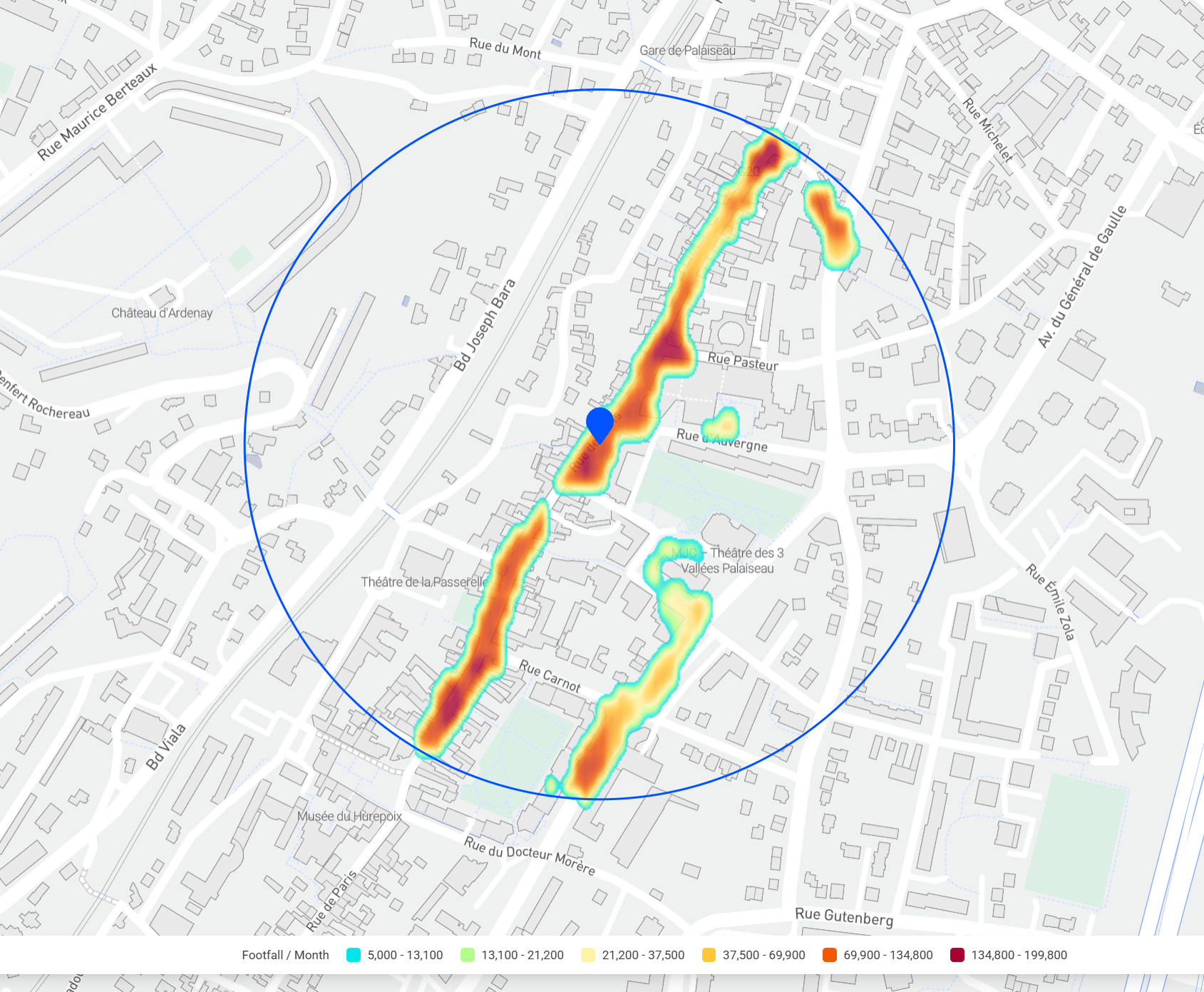
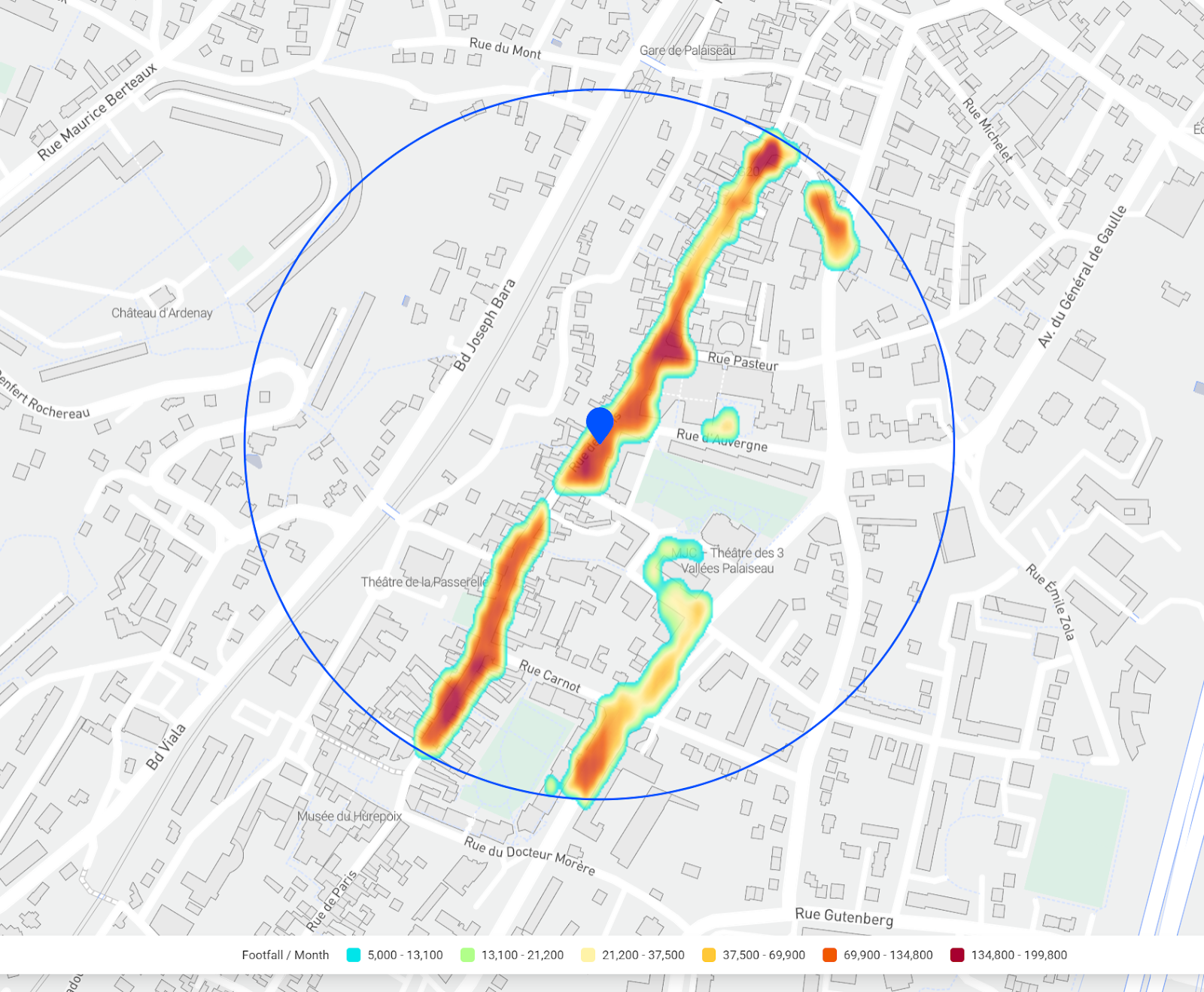
Now that you know what to look for, we need to start actually looking for sites. We recommend starting with an overview of areas you’re interested in by searching for high foot and vehicle traffic. If you’re looking at a city, this approach will help you quickly identify the main commercial streets.
Once you’ve identified high-potential areas, study more closely:
- Who lives here: average age, income, household size…
- Who comes here: is it for work, to visit, or do they live here? From how far do they come? How long do they stay?
- What is the historical performance of this area: is this area getting more and more attractive, or is it slowly losing traffic?
- What spending categories do visitors in this area prefer most?
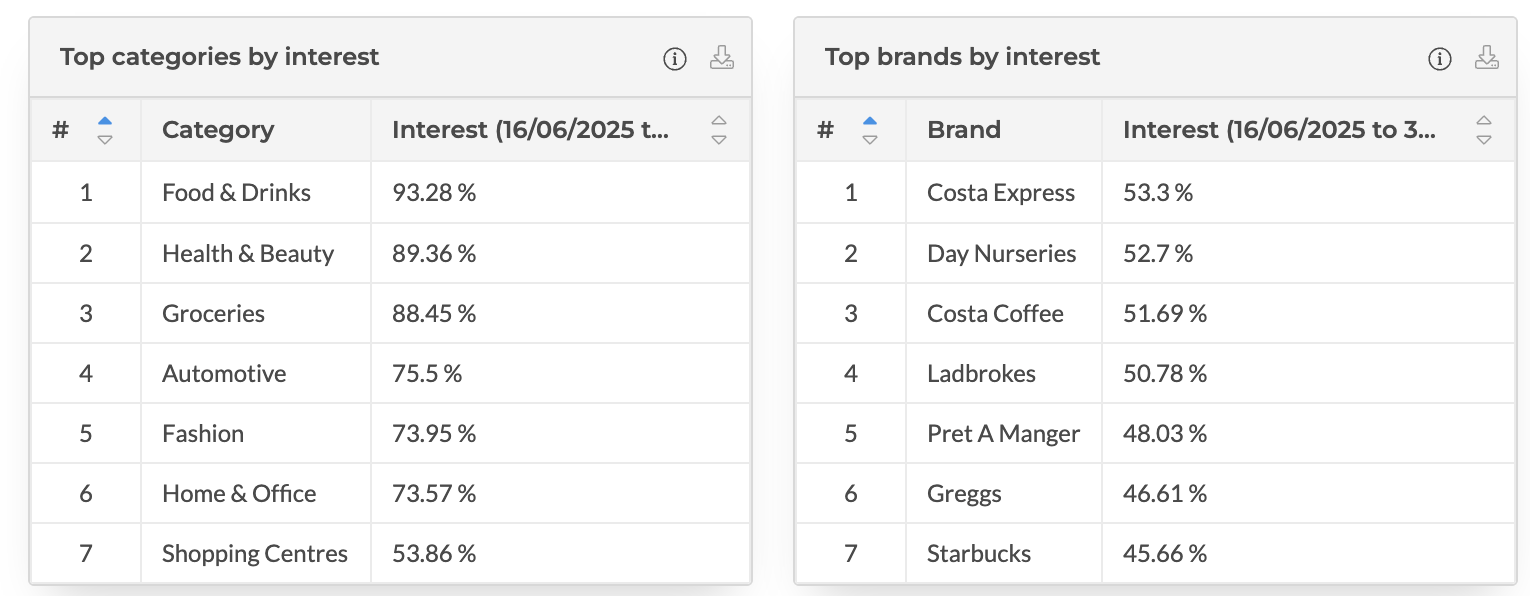
Understanding all of this will help you select your future location more precisely. High foot traffic is a great indicator, but if you’re selling diamond rings in an area where the average inhabitant is a student, it might not drive much business.
Our tip to succeed this step? Try to compare these areas as objectively as possible, typically by referring to the key success factors you’ve identified in the previous step.
3. Who are the neighbors of your future location?
Now that you understand the kind of clientele you could get, we recommend you go deeper by studying nearby businesses. They can act both as competitors or attractors depending on your business. It’s therefore extremely important to understand the dynamics of the local commercial ecosystem.
How do you tell the difference between a competitor and an attractor?
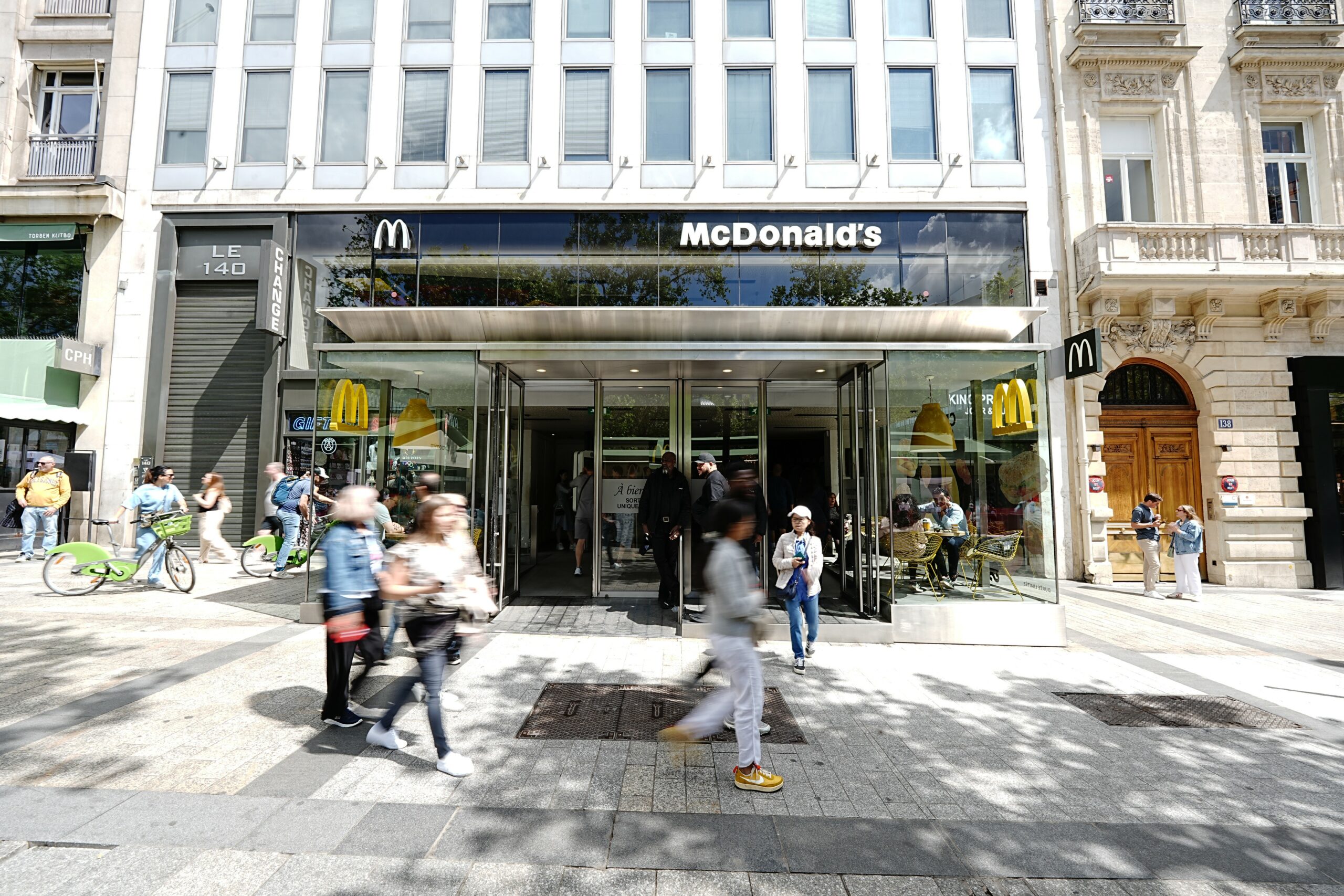
A competitor is a business with a very similar offering, targeting the same market. For example, a street with neighboring McDonald’s and Burger King restaurants will probably result in them competing for the same customers, and therefore reduce each other's total business potential.
For each of your locations, you can measure the “saturation index”, which is a count of each competitor within 100 meters. Read more here.
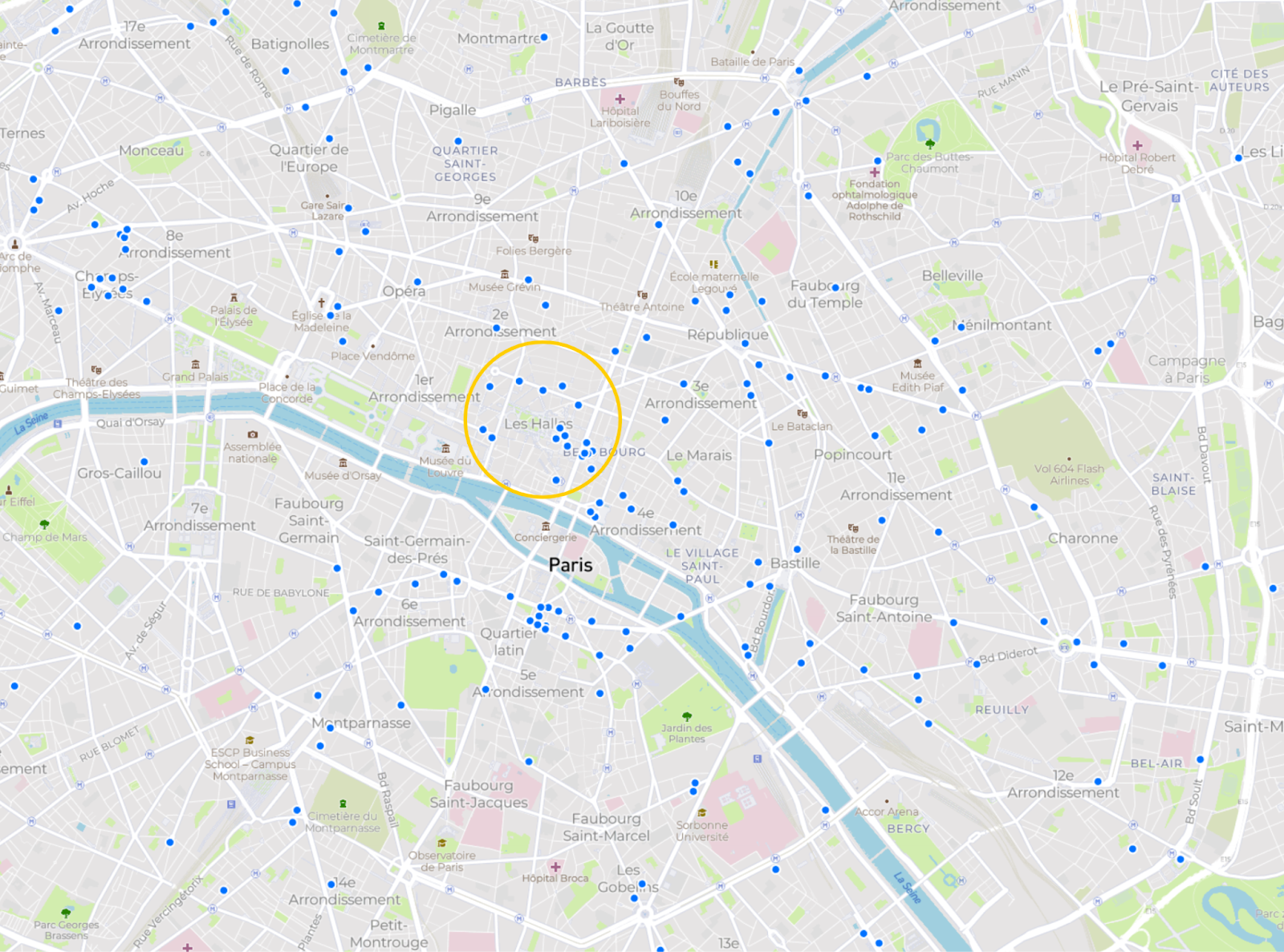
On the other hand, an attractor is a business that increases nearby foot traffic without eating into your bottom line, much like an anchor store in a mall. If you want to learn more about attractors, we recently published a study on the “Primark Effect”.
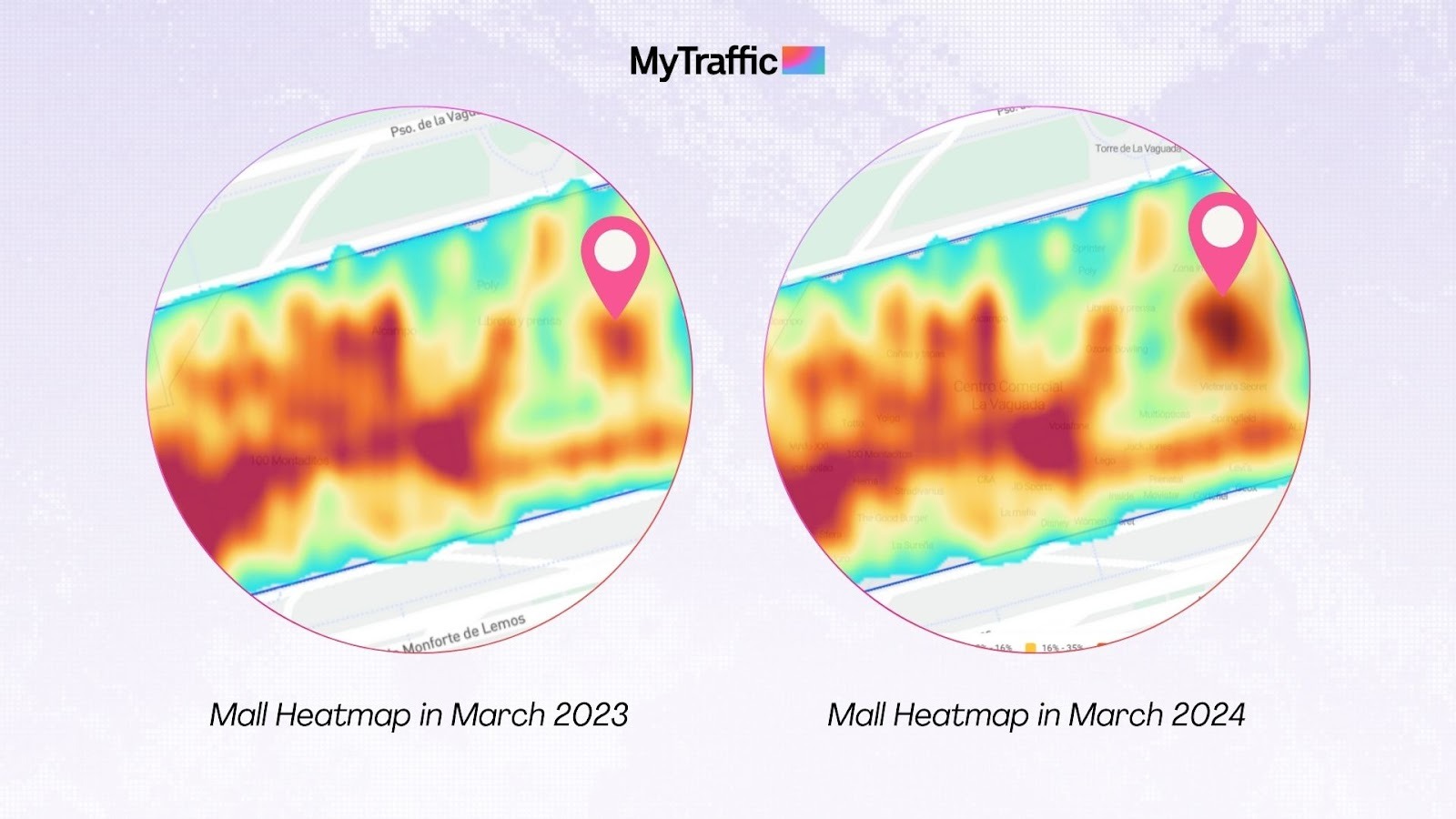
Tools like Geoblink by MyTraffic greatly accelerate this process by already providing a list of different commercial markers, including your competitors. You can learn more about the tool by booking a demo.
4. Understand the site's catchment area.
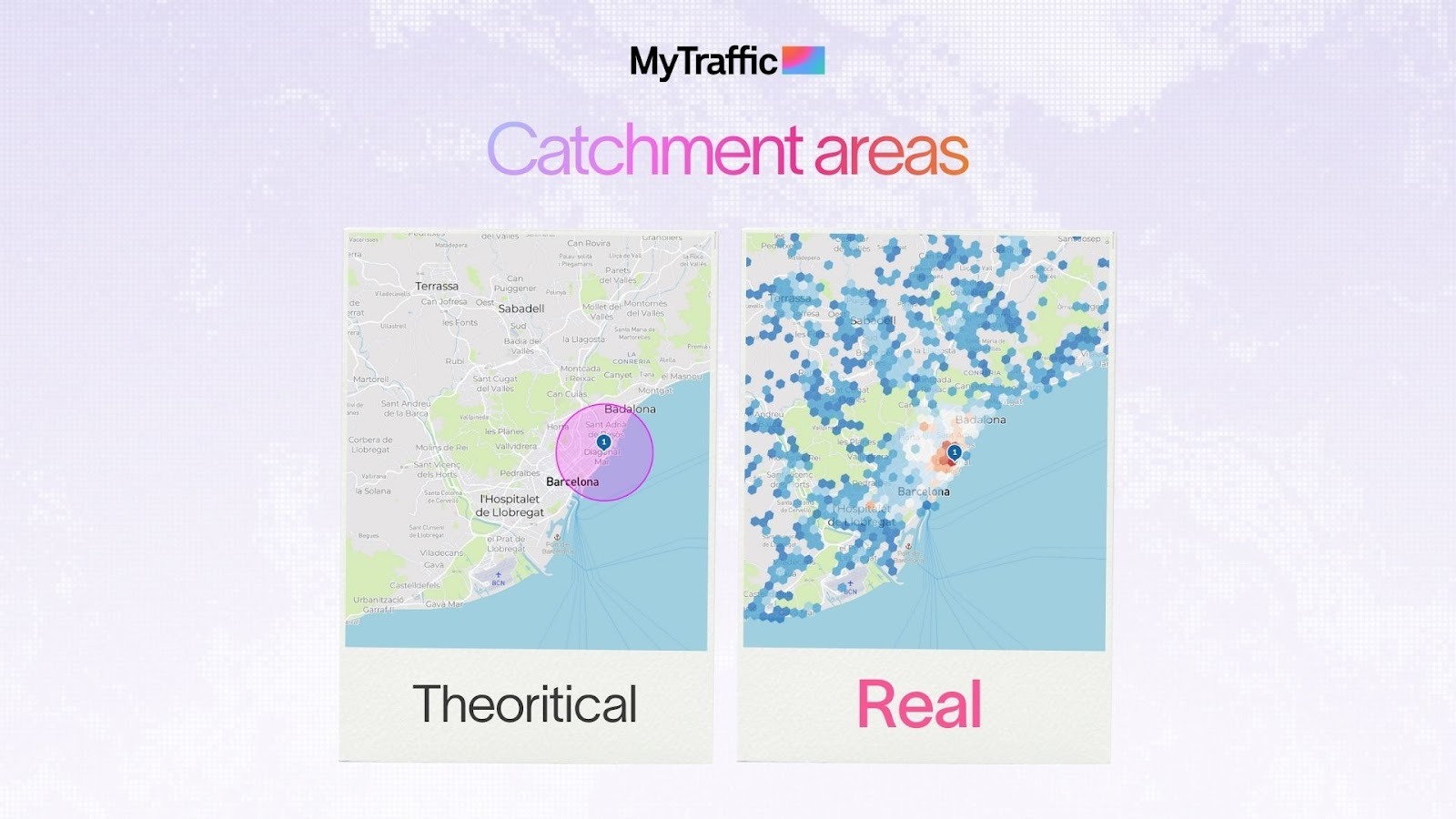
Beyond understanding the immediate vicinity of the locations you’ve identified, you can also try to understand where your visitors come from and how they behave, as this can help you understand if your offer will be attractive. For example, if your visitors mainly come from a specific city district, then you could maybe look for leases in that district and save on rent!
Catchment area analysis is also invaluable to quantify and predict cannibalisation rates if you run a store or restaurant network. If a future location has an overlap of catchment area with an existing location, then opening a new site might result in a reduction of revenue for the established one.
Our tip to succeed this step? Use a tool like Geoblink by MyTraffic that can accurately measure real catchment areas instead of theoretical ones. This will help you reduce errors, and pilot more effectively your expansion strategy.
5. Go on site to understand the different offers and leases
Evaluating a site based on precise data analytics is good, but once you’ve identified high-potential locations, you’ll need to go on site to understand each offer more closely.
Factors such as parking spots, nearby public transportation, or visibility are more easily understood once you’re on site. Inspecting each site also helps you understand how much work needs to be done to the space to fit your needs. Is the infrastructure for a kitchen present? Do you have room for storing inventory?
Nothing beats going on site. However, filtering all the lease offers through each previous step before going on site will help you save precious time and money.
Use predictive analytics to de-risk expansion
Still unsure? Retailers and F&B actors have started using predictive analytics to conduct sales forecasts of future locations! If your existing network is large enough, we recommend conducting a similar study before validating any lease to accurately analyse P&L.
TL;DR
Choosing the right location starts with understanding what drives your business’s success, and using data to replicate it. Begin by identifying the key factors that define a good site for your brand, then compare potential areas against these criteria. Analysing nearby competitors and catchment areas will help you rule out unsuitable options, while visiting shortlisted locations ensures the final choice works in practice.
If you’re planning to expand across Europe, MyTraffic can help you make smart, data-driven decisions in 8 European countries, as well as Switzerland, Austria and Poland in the following months !