


.jpeg)
.jpg)
.jpg)

Follow us on
The best shopping center for your brand is not the one with the most footfall. It is the one where footfall, visitor income, loyalty patterns, and cannibalization risk align with your specific expansion criteria, and finding it should take minutes, not months.
Retail networks across Europe are expanding faster than ever. Rituals opened over 200 stores globally in 2025 alone, reaching 1,500 locations across 33 countries and €2.43 billion in annual revenue, according to CosmeticsDesign-Europe (2026). That pace of opening, roughly four new stores per week, is only possible when the expansion team can evaluate hundreds of potential sites quickly and with precision.
But most expansion teams are not set up for that speed. They are working with broker shortlists, static market reports, and spreadsheets that take weeks to assemble. The gap between how fast brands want to grow and how fast they can evaluate locations is where the wrong stores get signed and the right ones get missed.
This article breaks down a practical methodology for identifying the highest-potential shopping centers for your brand, based on the criteria that actually predict performance. It draws on a real expansion study of 317 French shopping centers conducted for Rituals, alongside industry research on cannibalization modelling and French retail market trends.
Why do most shopping center expansion decisions still rely on outdated methods?
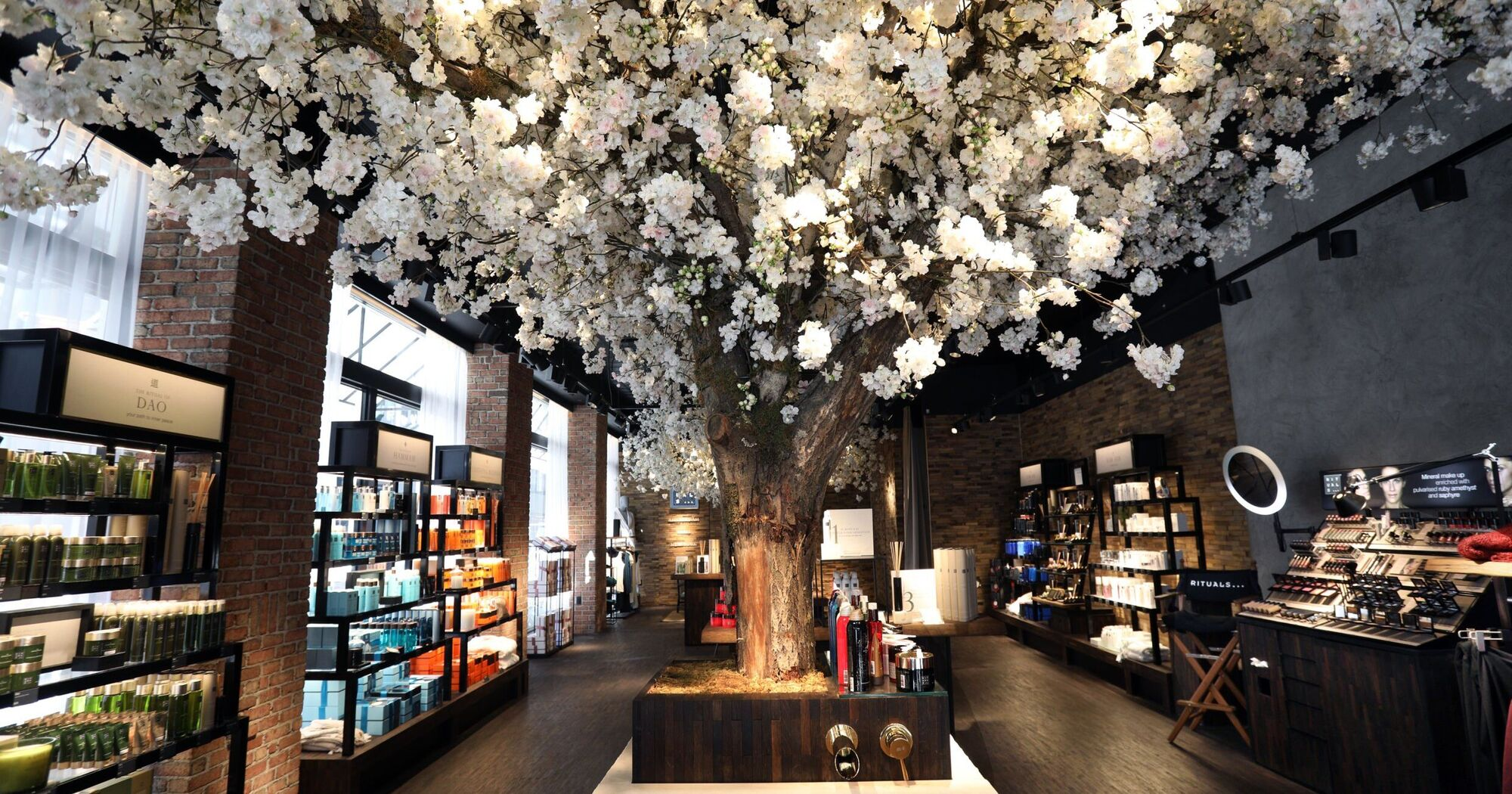
The default process for most retail expansion teams looks something like this: a broker sends a list of available units, the team filters by region and size, someone pulls footfall numbers from a market report, and decisions are made based on a handful of familiar metrics plus intuition built over years in the field.
That intuition is real and worth protecting. The problem is that it cannot scale. When a brand like Rituals needs to evaluate 300+ shopping centers to find 5 that fit, no team can manually cross-reference footfall data, income demographics, loyalty patterns, competitive density, and cannibalization risk for every location. The analysis either gets simplified (look at footfall only) or slowed down (wait three months for a consultant study).
Expansion speed has become a competitive variable, not just an operational preference. According to Cushman & Wakefield's 2025 Global Cities Retail Guide, retail vacancy across European markets is tightening as brands compete for the same quality spaces. The window between a unit becoming available and a lease being signed is shrinking. Teams that can evaluate and rank 300 locations in days rather than months are the ones signing the best sites.
The shift is not about replacing human judgment. It is about compressing the analytical work so that judgment can focus where it matters: on the final five locations, not on the first two hundred.
What criteria actually predict whether a shopping center will work for your brand?
Footfall is the metric everyone starts with, and for good reason. A center with 15,000 daily visitors generates more natural exposure than one with 5,000. But footfall alone tells you almost nothing about brand fit.
Here are six criteria that, scored together, give a far more accurate picture of expansion potential. These are the same criteria used in Gini by Mytraffic's Expansion Planner workflow to score and rank 317 shopping centers for Rituals across France.
Total daily footfall. The baseline volume metric. It tells you how many potential customers walk past your unit every day. For Rituals, the top-scoring centers ranged from roughly 13,600 to 19,560 daily visitors. But the center with the highest footfall (Bay 2, Collégien, at 19,560) did not rank first, because other criteria mattered more.
Average visitor income. This is where brand fit starts to emerge. A premium wellness brand like Rituals needs visitors with disposable income aligned to its price point. The top five centers in the analysis showed average visitor incomes between €43,543 and €48,648. A center with 20,000 daily visitors but an average income 30% below your target customer profile will underperform a smaller center with the right demographics.
Loyalty rate. This measures what percentage of visitors return regularly. A high loyalty rate (above 40%) signals that the center has a stable, repeat-visit audience, the kind of customer base that supports subscription-driven or repeat-purchase brands. The Rituals shortlist showed loyalty rates between 42.4% and 49.1%. Centers with high footfall but low loyalty often depend on one-off tourism or event traffic, which creates volatile sales.
Number of existing stores. Tenant count is a proxy for commercial maturity and footfall diversity. A center with 120 stores generates different traffic patterns than one with 40. More stores typically mean more dwell time and more cross-shopping, but they also mean more competition for attention. The scoring model weights this against your category: if you are the only wellness or beauty retailer in a 100-store center, the opportunity is stronger than being the fourth one.
Tourist volume. For internationally recognized brands, tourist traffic adds a layer of demand that is not captured in local demographic data. Tourists tend to spend more per visit and are less price-sensitive. In France, shopping centers near transport hubs, major attractions, or business districts carry higher tourist ratios, which can significantly shift the revenue forecast for the right brand.
Cannibalization risk. This is the criterion most expansion teams underweight, sometimes because they do not have the data to calculate it. Cannibalization measures the percentage of your future store's customers who would otherwise shop at an existing location in your network. CBRE's research on retail cannibalization modelling demonstrates that a location which looks strong in isolation can generate zero net new revenue if it simply redirects existing customers. In the Rituals analysis, the top-ranked center (Centre Commercial Pontault-Combault) had a cannibalization rate of just 10.53%, meaning nearly 90% of its customer base would be net new to the network. The second-ranked center (Claye Souilly) had a slightly higher rate of 12.16%, which still fell within an acceptable threshold.
When these six criteria are weighted and scored together, the ranking shifts substantially compared to a footfall-only view. That shift is where the real value of structured expansion analysis sits.
What did the Rituals expansion analysis actually reveal?
Using Gini by Mytraffic's Expansion Planner, 317 shopping centers across France were scored and ranked against Rituals' brand DNA and strategic priorities. The analysis produced a clear shortlist of five top-performing locations.
#1: Centre Commercial Pontault-Combault. Daily footfall of 16,162. Average visitor income of €46,124. Loyalty rate of 47.23%. Cannibalization risk of just 10.53%. This center ranked first because it combined strong income demographics with the lowest cannibalization exposure in the top five. Nearly nine out of ten potential customers here would be net new additions to the Rituals network.
#2: Centre Commercial Claye Souilly. Daily footfall of 17,571. Average visitor income of €43,543. Loyalty rate of 46.55%. Cannibalization risk of 12.16%. Higher footfall than Pontault-Combault, but a slightly lower income match and marginally higher cannibalization risk pushed it to second.
#3: Bay 2, Collégien. Daily footfall of 19,560, the highest in the top five. Average visitor income of €45,369. Loyalty rate of 42.4%. The strongest raw traffic numbers, but the lowest loyalty rate among the shortlisted centers. A brand with a single-purchase or impulse model might rank this first. For a repeat-purchase brand like Rituals, the lower loyalty rate was a flag.
#4: Centre Commercial MODO. Daily footfall of 13,600. Average visitor income of €45,675. Loyalty rate of 49.1%, the highest of any shortlisted center. Lower volume, but the most engaged, loyal audience. This is the center where a new store would most likely convert visitors into regular customers.
#5: Centre Commercial Ville du Bois. Daily footfall of 14,956. Average visitor income of €48,648, the highest in the shortlist. Loyalty rate of 44.7%. The strongest income demographics, suggesting a customer base with the purchasing power for premium products.
The analysis also produced a geographic mapping of all 317 centers, revealing white space clusters (areas with no existing Rituals presence but strong demographic fit) and overlap zones where new openings would risk cannibalizing existing stores. That geographic view is what moves the conversation from "where is the best center?" to "where is the best center that also strengthens our national network?"
The entire analysis, from defining criteria to receiving a ranked shortlist, took under 10 minutes inside the Expansion Planner workflow. For context, the same analysis conducted manually with multiple data vendors and spreadsheets typically takes expansion teams several weeks.
How do you identify and define your brand's key success factors?
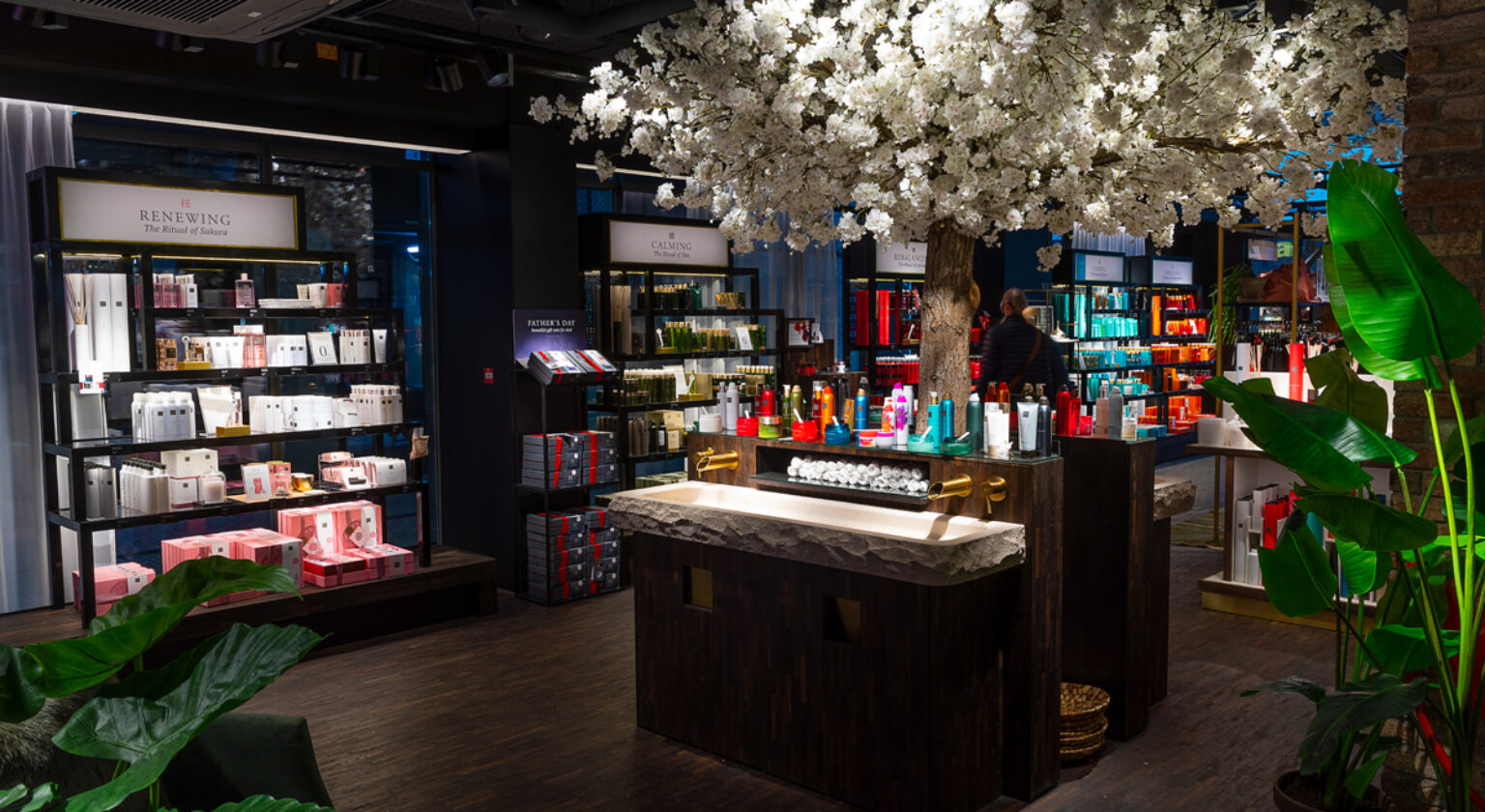
The Rituals analysis scored centers against six specific criteria. But those six criteria are not universal. A fast-food franchise, a luxury fashion label, and a pet supply chain would each weight the same data points differently, and might add criteria the others ignore entirely.
Before scoring any locations, an expansion team needs to answer a harder question: what actually makes your existing stores succeed?
Start with your own network data. Pull the top 10 and bottom 10 performing stores and compare them across available metrics: footfall, visitor demographics, catchment area income, competitive density, loyalty rates, dwell time, and tenant mix. The patterns that separate your best from your worst stores are your key success factors.
For Rituals, the analysis surfaced that visitor income above €43,000 and loyalty rates above 42% correlated strongly with top-performing locations. A discount footwear retailer might find the opposite: their best stores sit in high-footfall, lower-income centers with strong family demographics and weekend-heavy traffic patterns.
Do not assume your key success factors are the ones your industry typically uses. A common mistake is to copy competitor logic. If your closest competitor is optimising for urban centers with tourist traffic, but your best stores actually perform in suburban centers with high repeat-visit rates, following their strategy will lead you to the wrong locations.
Demographics matter beyond income. Age distribution, household composition, and commuting patterns all shape purchasing behaviour. A center whose catchment area skews toward young professionals without children will perform differently for a childrenswear brand than for a cosmetics brand. Gini by Mytraffic's Data Explorer workflow lets teams define precise measurement areas around any address and pull demographic, mobility, and competitive indicators to build a detailed picture of who actually visits each center and where they come from.
Once key success factors are defined, they become the scoring weights in the expansion model. This is what turns a generic "rank by footfall" exercise into a brand-specific evaluation. The weights should be revisited annually, because customer profiles shift and so does network composition. A brand that had five stores two years ago and now has fifty will have different cannibalization thresholds and different white space priorities.
What mistakes do expansion teams make when evaluating shopping centers?
Treating footfall as the only proxy for potential.
A center with 25,000 daily visitors and 2% brand-fit overlap will underperform a center with 15,000 visitors and 12% overlap. Volume without demographic alignment is noise.
Ignoring cannibalization until it is too late.
CBRE's research on retail cannibalization shows that a new store can appear profitable in isolation while generating zero net revenue for the broader network, because it simply redirects existing customers. Measuring cannibalization requires data on customer origin and travel patterns, not just distance between stores. Two locations 20km apart can have high overlap if they share a motorway corridor.
Relying on broker shortlists as the starting universe.
Brokers work with the units they have available, not with the full map of where your brand should be. The best expansion opportunities might be in centers where no unit is currently listed, but where an existing tenant is underperforming and likely to vacate. Starting with a scored ranking of all centers in a market, then matching against availability, produces better results than starting with availability and hoping the right fit appears.
Over-indexing on flagship locations.
Prestige addresses generate brand awareness, and they matter for that reason. But they rarely produce the highest return per square metre. A mid-size suburban center with strong loyalty rates and the right income demographics can outperform a trophy location that costs three times the rent. The best expansion strategies balance network-building locations (high ROI, strong repeat traffic) with brand-building locations (high visibility, high tourist traffic).
Waiting too long to act.
The French shopping center market illustrates this well. Data from the FACT federation (2025) shows that overall shopping center turnover in France was essentially flat in 2025 (down 0.2%), but the Health & Beauty segment grew by 3.6%. That divergence means wellness and cosmetics brands are competing for space in a market where overall supply is not growing. Centers that match a brand's criteria today may not have availability six months from now.
Frequently asked questions
How many shopping centers should an expansion team evaluate before making a shortlist?
A structured scoring model should evaluate every center in the target geography, not a pre-filtered sample. In the Rituals study, 317 centers were scored across France. Starting with the full universe prevents selection bias and reveals opportunities in locations the team might not have considered.
What is an acceptable cannibalization rate for a new store?
This varies by brand and growth stage. Early-stage networks expanding into white space can aim for rates below 5%. Mature networks infilling existing markets may accept rates up to 15-20% if the incremental revenue still exceeds operating costs. The threshold should be defined before scoring, not rationalised after the fact.
Can the same criteria be used across different countries?
The criteria categories (footfall, income, loyalty, competition, cannibalization) apply across markets, but the thresholds and weights need to be recalibrated. Average visitor income benchmarks in France will differ from Germany or Spain. Loyalty rate patterns vary by shopping culture. The framework travels; the specific numbers do not.
How often should an expansion scoring model be refreshed?
At minimum, annually. Consumer mobility patterns, competitive landscapes, and shopping center tenant mixes shift year to year. A center that scored poorly 18 months ago may have improved after a renovation or anchor tenant change. Quarterly refreshes are more appropriate for brands in active expansion phases.
What is the difference between Gini by Mytraffic's Expansion Planner and manual site selection?
The Expansion Planner applies a structured scoring model across hundreds of locations simultaneously, using Mytraffic's proprietary footfall, demographic, and mobility data. Manual site selection uses the same logical framework but requires assembling data from multiple vendors and processing it in spreadsheets, which typically takes weeks rather than minutes and limits the number of locations that can be realistically compared.