



Follow us on
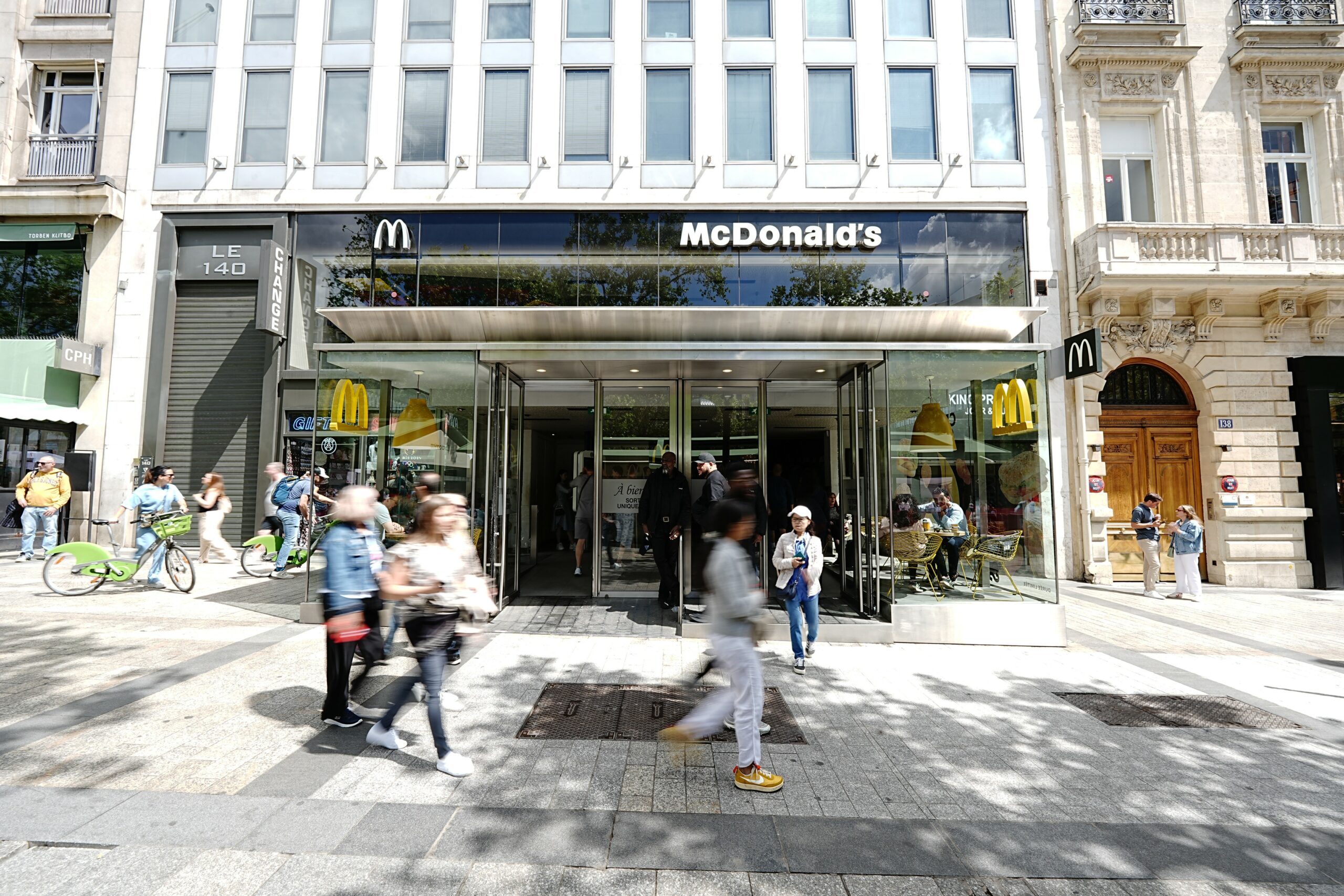
McDonald's spent two years testing a drinks-only spin-off called CosMc's and shut it in June 2025. Its crafted sodas, refreshers and energy drinks are now on the menu in US McDonald's restaurants, part of what the company calls a $100 billion global beverage opportunity. The drive-thru coffee chains that US investors have been backing got there first: Dutch Bros, 7 Brew, Black Rock Coffee Bar and Swig built their networks on drinks, out of buildings far smaller than a Starbucks. If you run a burger or coffee concept, the short answer is that a beverage line pays when your afternoons are quiet and the road outside is busy at those hours. Drinks traffic follows its own site rules, so a new menu only brings in new trips where the road already carries them.
This is the second edition of our US Retail Observatory by Pauline Paris, after e-commerce brands opening physical stores and before the fastest-growing US retail categories.
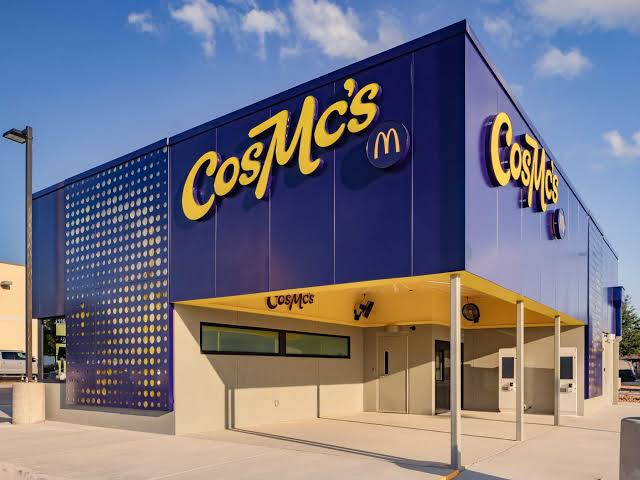
What McDonald's learned from CosMc's
McDonald's announced in May 2025 that it would close CosMc's, and its last five locations shut at the end of June, less than two years after the first one opened. The company presented the closure as a way to bring the drinks into its existing US restaurants rather than build a separate chain with its own sites.
In February 2026, McDonald's said a test of the CosMc's-inspired drinks in more than 500 US restaurants had been "highly successful". Jill McDonald, the company's global chief restaurant experience officer, said the new beverages "drove incremental occasions across different dayparts as well as higher average check". In plain terms, the drinks brought in extra visits at times of day when those customers wouldn't otherwise have come, and each order was worth more on average. (Dayparts are the industry's name for the slots of the trading day, such as breakfast, lunch, the afternoon and dinner.)
Refreshers, which are fruit-flavored iced drinks usually with caffeine, and crafted sodas such as Dirty Dr Pepper went nationwide from May 2026, with a Red Bull Energizer to follow. That's the opening for burger operators: a drink order doesn't need the grill, and it can bring customers in during the hours a kitchen built for lunch and dinner sits half idle.

The drive-thru coffee chains growing fastest in the US
Five chains show how far the drinks-only model has gone, and each grew mainly by opening small units fast.
Dutch Bros, the largest drive-thru-only chain, grew revenue 27.9% to $1.64 billion in fiscal 2025 and ended the year with 1,136 shops, 154 of them new, according to its fiscal 2025 results. It plans at least 181 openings in 2026 and 2,029 shops by 2029. Its systemwide sales reached $2.2 billion in 2025 on the QSR 50.
Systemwide sales count every shop under the brand, including those franchisees run, which is why they're higher than revenue: the company only books its own shops' sales and the fees franchisees pay it.
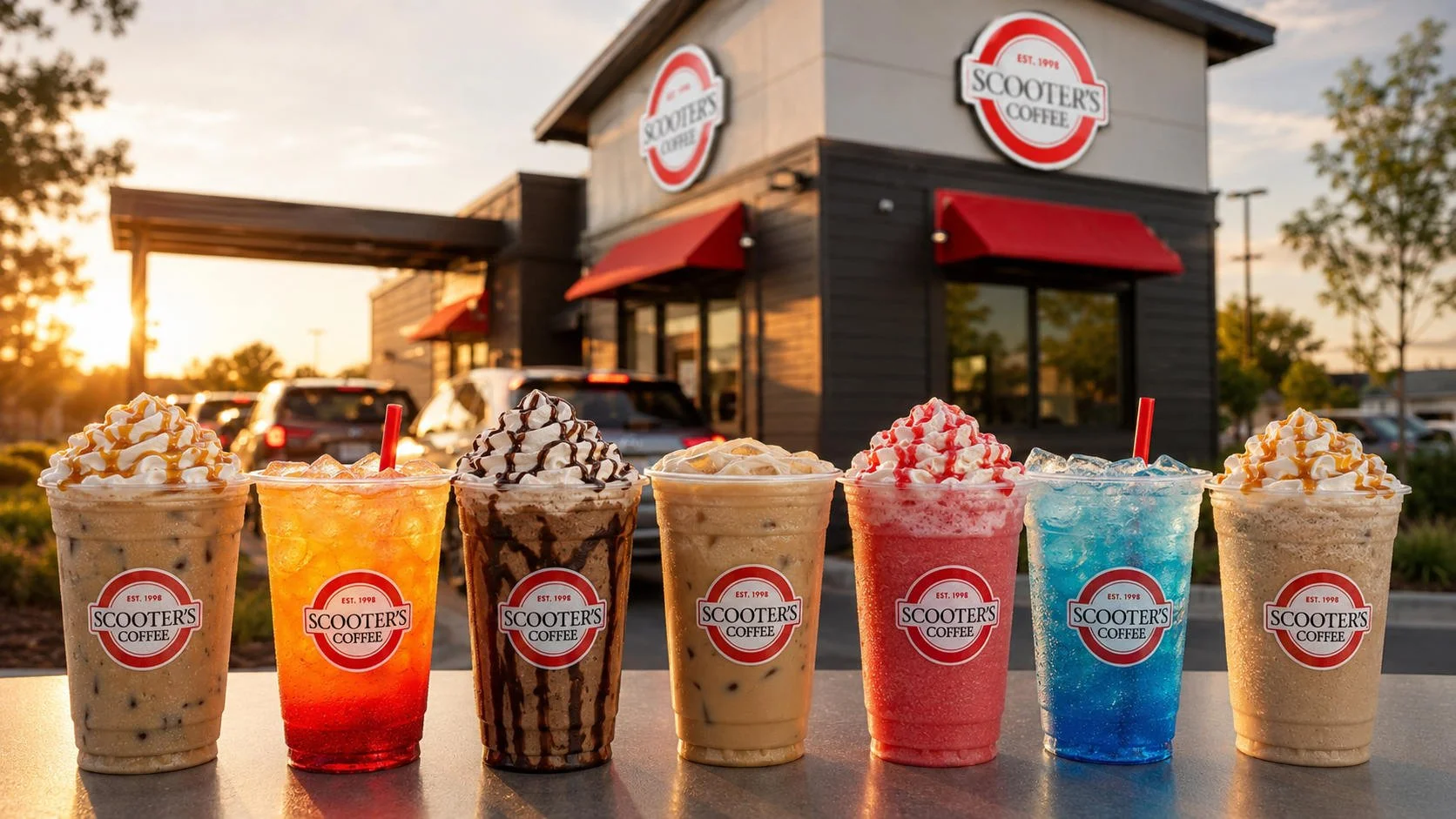
7 Brew is adding stands faster than anyone. The same QSR 50 list puts its 2025 systemwide sales at $1.2 billion across 602 units, 281 more than a year earlier. QSR Magazine's analysis of its franchise disclosure document, the filing every franchisor must give prospective franchisees, found that it opened 283 stands in 2025 without closing one. Drinks still come first: 7 Brew only added a line of five bakery items in November 2026. Scooter's Coffee, another drive-thru specialist, ended 2025 with 906 units and $859 million in systemwide sales, which makes three drive-thru-only chains with more than $850 million a year in sales.
Black Rock Coffee Bar, which is publicly traded, reported in its third-quarter 2025 results that same-store sales rose 10.8% and revenue rose 24.2% to $51.5 million across 169 stores. Same-store sales only count stores open for at least a year, so that growth didn't come from new openings. In the same quarter Sweetgreen, a salad chain that depends on the lunch rush, reported a 9.5% drop in same-store sales. A chain built on lunch was losing customers while a chain built on drinks was gaining them.
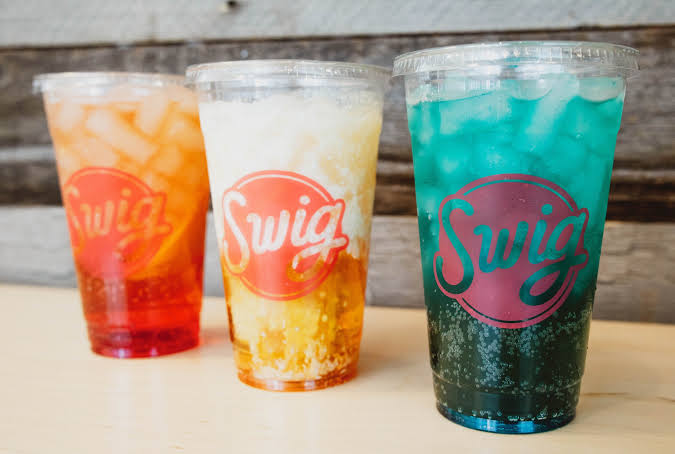
Swig sells dirty sodas, soft drinks mixed with cream and syrups, and had more than 150 locations across 16 states in August 2026, when it signed a 38-unit franchise deal for Kansas City. Interest keeps climbing: Yelp searches for dirty soda rose 2,547% between 2022 and 2026, and Yelp's 2026 ranking of fast-growing brands puts drive-thru coffee next to chicken among the fastest-growing US categories.
For a burger franchisee, all this growth lands in one place: hundreds of new stands a year chasing the same suburban plots.
How a 510-square-foot stand outsells a burger restaurant
The 320 7 Brew stands open all of 2025 averaged $2.66 million in sales from an average building of 510 square feet, according to the QSR Magazine analysis. That's more than an average Starbucks, at about $1.9 million, or an average Dutch Bros, at $2.16 million. On the QSR 50 burger ranking, a Wendy's averaged $2.0 million and a Burger King $1.66 million in 2025. Only a handful of burger chains did better, including In-N-Out at $6.03 million, McDonald's at $4.09 million, Culver's at $4.04 million and Whataburger at $3.91 million.
Matt Lipson of Northmarq, a commercial real estate finance firm, puts a typical Starbucks at about 2,200 square feet and a Dutch Bros at just over 900. A 7 Brew stand is a quarter the size of that Starbucks, yet it sells more than most burger restaurants, with no grill, fryer or dining room to build. Each dollar of sales costs far less to build, and a building that small, with no kitchen, goes up faster, so a drinks chain can lock up sites while a burger brand is still under construction.
The site logic of a drive-thru beverage stand
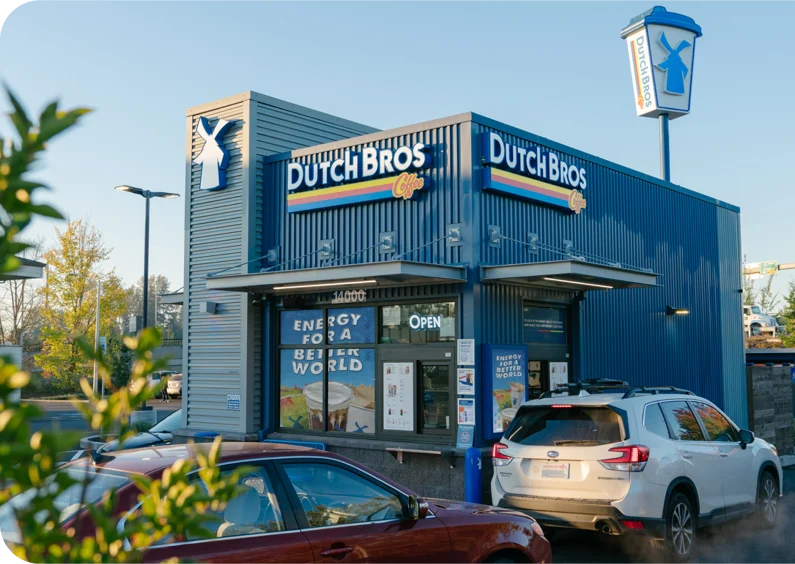
James Cook of JLL, the commercial real estate firm, told Bisnow that "there's a fight out there for real estate from a couple of quickly expanding beverage users". The plots they're fighting over are the suburban pad sites burger chains also want: standalone lots, usually at the edge of a shopping center parking lot, with room for a drive-thru.
A beverage stand lives on repeat car trips at set hours, so its checklist differs from a burger restaurant's on five points. The same five points tell a burger operator whether a new drinks menu will bring new trips to a site it already has. Each one can be measured before you sign: traffic counts from the state department of transportation give the volume, and location data gives visit hours and visit length for the address.
Which side of the road the commuters are on
People buy their morning drink on the way to somewhere else. A stand on the inbound side of a commuter road, where drivers can turn right in and right out without crossing traffic, catches that trip. The same stand across the road asks drivers to cross traffic on the way to work, which fewer will do. Scooter's Coffee tells prospective franchisees to look for roads popular with morning commuters, with speed limits between 25 and 45 miles per hour, and says a corner lot with two entrances is ideal. A burger restaurant is less sensitive to direction, because its lunch trips start from nearby offices and homes rather than from one commute.
Car traffic volume
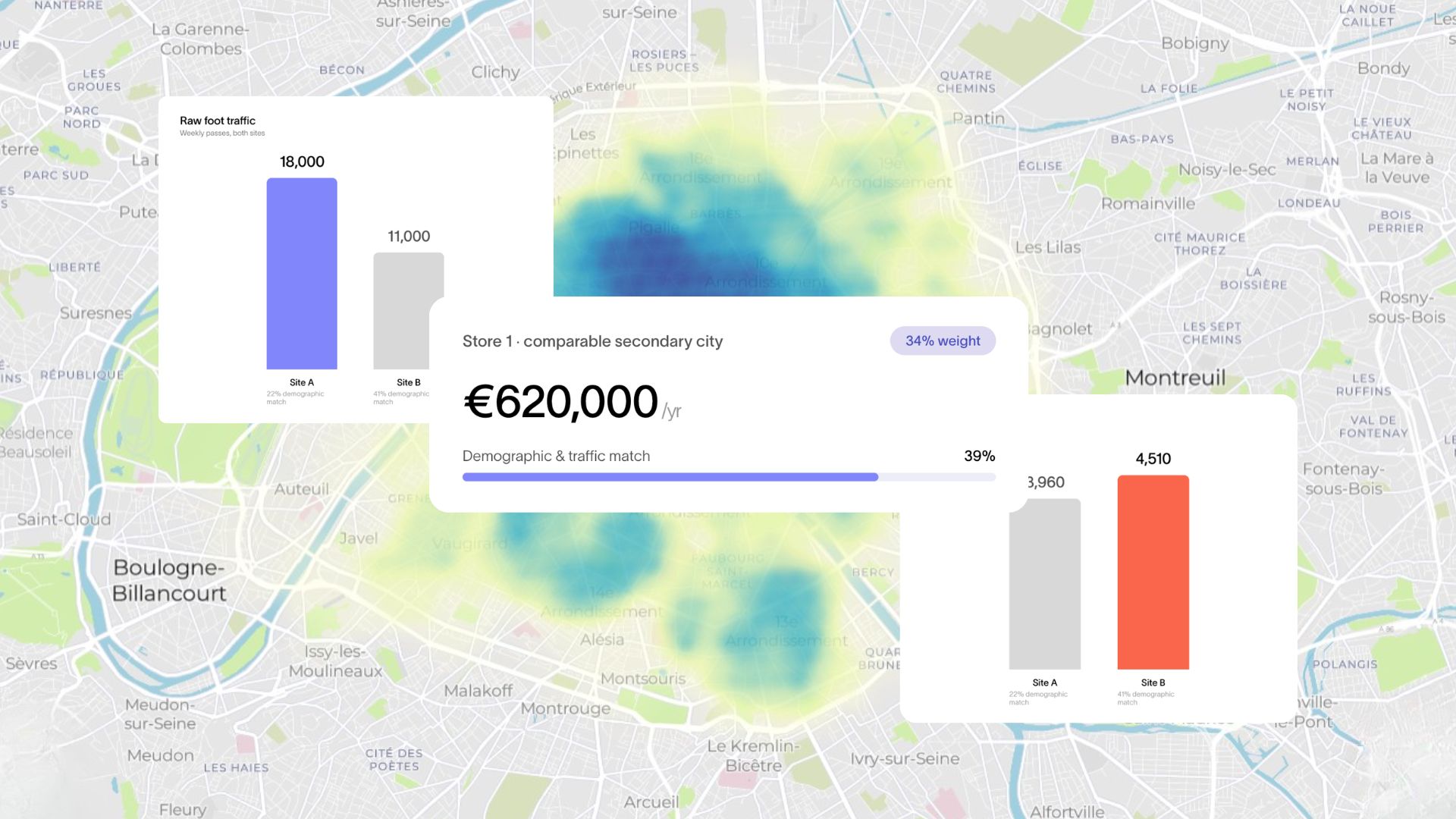
Compare the cars passing each site every day, then ask how many are the same drivers coming back. A stand lives on habit, so the same commuters passing five days a week are worth more than heavier one-off traffic. Most state DOTs publish annual average daily traffic counts for major roads, which gives you the first number, and visit data gives you the second. That's why the busier of two roads isn't always the better site, as the two sites compared below show.
Visit hours
Energy drinks give a stand customers who don't drink coffee, and reasons to stop after the morning rush. Datassential, a food industry research firm, found energy drinks on 26.5% of drive-thru and coffee chain menus, up 186.8% in four years.elow.]
Dwell time
Dwell time is how long a visitor stays. The drinks-only model depends on short stops where the customer never leaves the car, and Datassential describes drive-thru orders as delivered in under three minutes. A site on a road people drive along to reach schools, gyms and offices fits the model, because the stop is a detour of a few minutes. A shopping center where visitors stay for an hour suits a sit-down café better.
Stacking space
Stacking space is the number of cars that can wait in the drive-thru lane without spilling onto the road, and coffee lines can run as long as burger lines or longer. Counts from Minneapolis and Saint Paul in 2010 and 2012, still cited in a 2024 planning memo by the City of Saint Paul, found a maximum of 16 vehicles at coffee shops against 13 at fast-food restaurants. The city's code requires only four stacking spaces per lane for fast food and sets no fixed minimum for coffee.
A site with room for up to 16 cars off the public road avoids lost sales, and it avoids trouble with a city that can push back on drive-thrus whose lines block traffic. Many operators now build double lanes to keep lines short, Bisnow reports.
Should you add a beverage line to your menu?
If you run a burger restaurant, start with your own hourly sales. Say you serve 60 orders between noon and 1pm but 15 an hour from 2pm to 5pm: your crew and your lane sit mostly idle all afternoon. If the road outside is busy at those hours, refreshers and energy drinks can fill that capacity without the kitchen. That's what McDonald's saw in its 500-restaurant test: extra visits outside lunch and a higher average check, meaning more spent per order.
The drinks still need equipment. Restaurant Dive reported that McDonald's franchisees were investing in new equipment ahead of the national launch, citing BTIG analyst Peter Saleh, so price the machines and the extra menu complexity before you commit. Check too that your lane can take drink orders at noon without slowing your lunch peak, because customers will add the new drinks to lunch orders as well. And if your restaurant sits in a mall parking lot that empties after lunch, the drinks will sell to customers you already have rather than bring in new trips, so judge them on average check alone.
If you run a coffee chain, the competition has changed. McDonald's has 13,706 US restaurants, according to Nation's Restaurant News, and is selling similar flavored sodas nationwide, while 7 Brew plans 437 new franchised stands in 2026 alone, according to the QSR Magazine analysis. Adding energy drinks and sodas defends your afternoon, but your next stand should be chosen on commuter direction, stacking space and afternoon traffic rather than on the criteria you'd use for a café with seating.
If you invest in franchises, the drinks-only brands offer high sales from a small building with no kitchen: 7 Brew's $2.66 million average comes from 510 square feet, and it opened 283 stands in 2025 without closing one. The risk is crowding. McDonald's now sells similar drinks, and 7 Brew, Dutch Bros and Scooter's are all chasing the same suburban pad sites, so a unit's returns depend heavily on where it sits. Before you back a new unit, ask the franchisor how it scores commuter direction, afternoon traffic and stacking space.
What operators and investors should take from this
The drive-thru coffee chains on America's commuter roads are winning because they chose small sites for drinks first. McDonald's copying their menu confirms the demand, but it doesn't give McDonald's their sites. A new menu only changes what you sell at the sites you already have, so before you change it or sign for a new pad site, check which side of the road your customers drive on, how many of them pass every day, when they pass, how long they stop and how many cars your lot can hold.