

.jpeg)
.jpg)
.jpg)


Follow us on
Two restaurant sites can show almost the same foot traffic count and describe two completely different businesses.
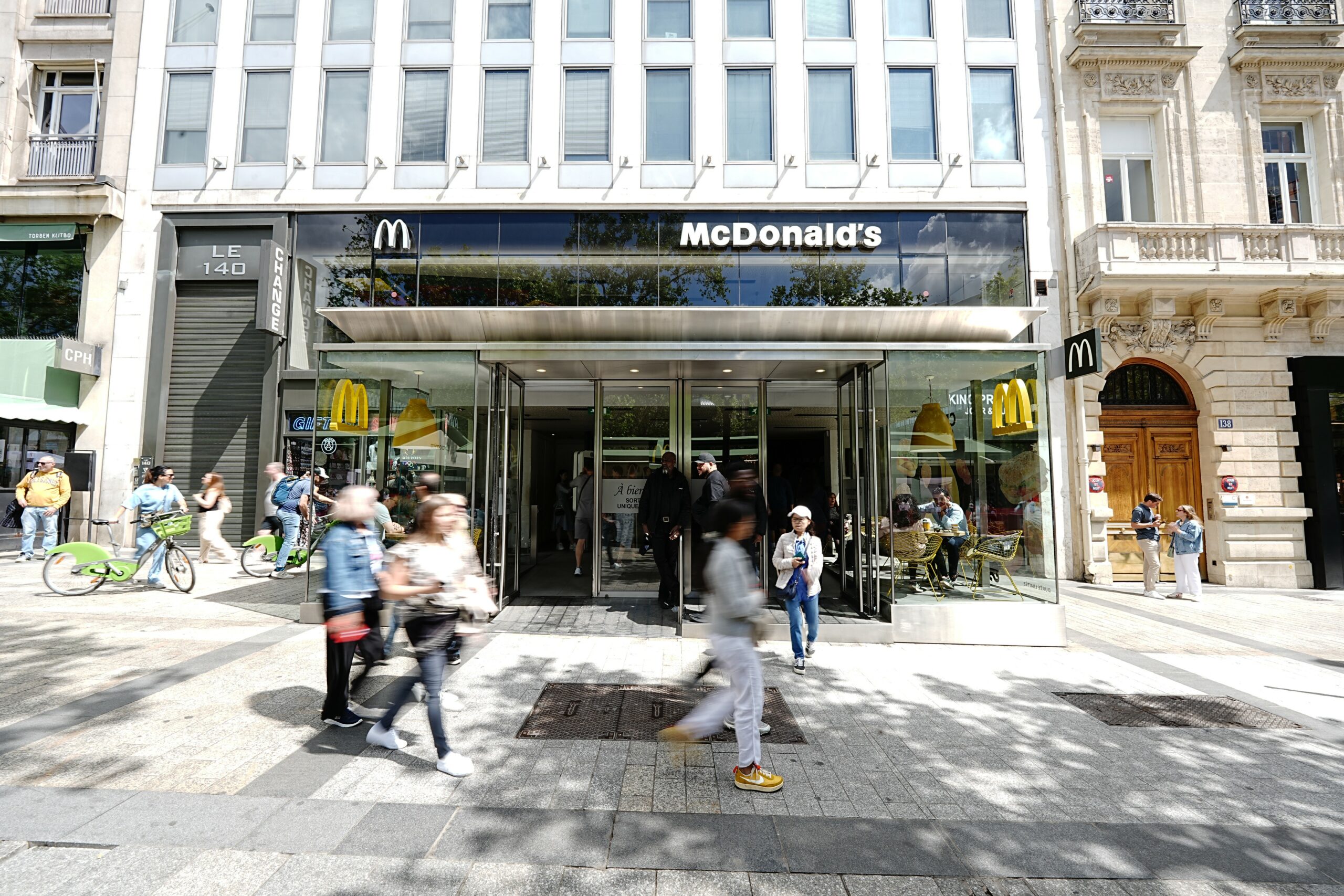
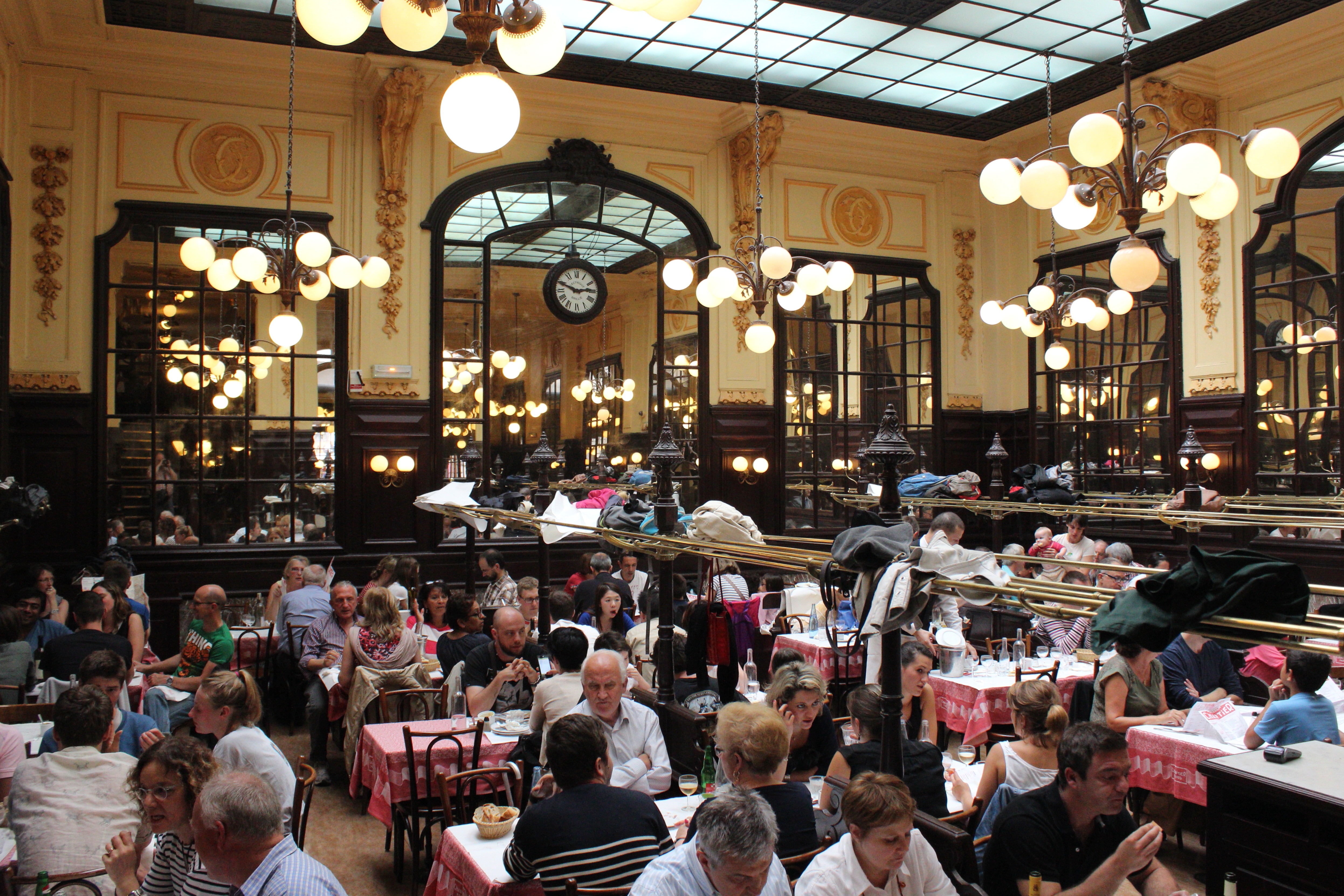
67,200 pedestrians walk past the McDonald's on the Champs-Élysées every day, and around 57,100 past Bouillon Chartier on Rue du Faubourg Montmartre. Both streets sit above the 99.5th percentile for Paris. But the devil is in the detail. A weekend day on the Champs-Élysées carries 81% more traffic than a weekday while the weekend gain on Rue du Faubourg Montmartre is just 15%.
One street gets tourists passing through your door. The other feeds locals at lunch and visitors at dinner. Same headline number, two different businesses.
Restaurant site selection, when done well, means running every candidate address through the same checklist, then scoring the trade-offs against a rent test before you sign anything. This guide gives you both halves: the numbers to pull at each site, and a weighted scorecard that turns those numbers into a ranking you can defend. It follows the same scoring discipline as our scoring grid for choosing a business location, adapted for restaurants.
What does your restaurant concept need from a location?
This question might be the most important, as it'll be the basis for the rest of your analysis. Ask yourself: what does my concept need? Is it lots of traffic at lunch? Is it wealthy visitors? Is it students?
If you don't know where to start, I recommend you contact other business owners in your sector. Reach out to them on Instagram, call them or simply walk through their door and study their customer profile.
A fast-casual lunch concept lives on office workers within a ten-minute walk, five days a week, while a destination dinner restaurant can work on a quiet corner if the right income bracket will travel to it.
This is the filter that makes every later number mean something. A site with 40,000 weekly pedestrians is worthless if none of those people match what you are selling (we've all seen empty stores and restaurants on bustling streets).
What do Paris footfall patterns reveal about restaurant site selection?
Footfall volume tells you how many people walk past, which is extremely important, but cross it with visitor profile data and you can accurately gauge how much of the traffic is going to be your actual clientele.
As an experiment for this article, I ran a study on 5 famous locations in Paris:
If you have trouble understanding this table, don't worry. I'll break it down here:
- The spread is 12x, and both ends work. Big Mamma Popolare on Boulevard de Sébastopol sits at the 63.5th percentile for Paris, twelve times quieter than the Champs-Élysées. Its target customer, the 25 to 35 year old Parisian, arrives through Instagram and word of mouth. For that model, an off-axis address at lower rent is part of the design.
- The peak day is the sharpest signal. Café de Flore is the only one of the five with a weekday peak, at +13.2%. Its customers live and work in the 6th and come for a routine, which is great for a café.
- Night share decides whether dinner service is viable. Bouillon Chartier carries 31.0% of its daily flow at night, the highest of the five, which is what an dining concept that closes at 11pm needs from a street.
So match the pattern first, then the volume. A weekday lunch concept on a street that gains 81% on Saturdays is paying for traffic it will never sell to.
How do you compare trade areas across candidate sites?
Pull the same set of numbers for every finalist, starting with each site's real catchment area. A five-minute walk in a dense city center and a five-minute drive in a suburb cover different populations, even though both read as "five minutes" on a map.
- Demographics. Age, income and household type.
- Footfall at the exact adress, measured the same way for every location. Our guide to analyzing foot traffic covers how the measurement works and what accuracy to expect.
- Repeat visits nearby. A high repeat-visit rate lowers your marketing cost per cover and flattens seasonal dips.
- Traffic by daypart, matched to how you run service (morning, lunch, snack, dinner).
- Dwell time near the site. More dwell means more chances to convert a passer-by.
- Seasonnality.
If you have no existing restaurant to benchmark against, pick a comparable independent one: similar format, similar price point, similar street type. Pull its footfall, visitor profile and visit frequency using a location intelligence tool, and use those as your baseline for your own site selection.
Which zoning rules and permits must clear before you sign?
Zoning and food-business registration are extremely important.
When you're evaluating a site, make sure that the premises are zoned for restaurant use. In France, the local PLU sets permitted destinations and sub-destinations, a change of use requires a déclaration préalable, and a permis de construire becomes necessary when the work touches load-bearing structure or the façade. The UK runs on use classes, Germany on the Baunutzungsverordnung. Ask the local planning office for the rules that apply to the exact address, and make sure to get the answer in writing.
Registration is an EU-wide duty. Article 6(2) of Regulation (EC) No 852/2004 requires every food business operator to notify the competent authority of each establishment under its control so that establishment can be registered, and to keep that authority informed of any significant change in activity or any closure (EUR-Lex). Lead times are set nationally, and they are longer than most first-time owners expect: UK local authorities ask for the registration form at least 28 days before food operations begin (example form, Scottish Borders Council).
Then the concept-specific permissions, which is where sites quietly fail:
- Alcohol. France requires a permis d'exploitation, obtained through a training course, plus the appropriate licence for on-premise service.
- Terrace and outdoor seating. Almost always municipal, often capped by square meters and by hour.
- Late-night hours. If your model needs the night-time clients like Bouillon Chartier, confirm the permitted closing time before you sign.
- Parking. Ask the landlord directly whether the premises meet the local parking requirement for restaurant use.
How do you assess the competition around each site?
Competitors answer two separate questions: whether your specific offer is already covered, and whether people come to this street to eat at all.
Start simple : are there any other restaurants who have the same concept and serve the same people for the same price?
Then widen out, because a crowd of restaurants is rarely bad news by itself. Food and drink clusters are the reason people pick one street over another at 12:30. Someone walking down a restaurant street has already decided to eat, so you are competing for a customer who arrived with intent. An isolated site pulls nobody in on its own, and every customer has to come from your own marketing.
So at each candidate address, ask both questions in order:
- Is anyone already serving my exact offer to my exact customer? If yes, that counts against the site.
- Is there enough food and drink nearby to make this a place people travel to for a meal? If yes, that counts in its favor.
An AI location intelligence tool like Gini by MyTraffic tells you in minutes whether the competition around an address is working for you or against you: who is already there, how much footfall they pull, and what their visitors look like.
If you already run a restaurant, add one more check: does this site overlap it's catchment area with my previous restaurants?
How do you score candidate sites against each other?
Score each finalist on five criteria, weight them using the concept brief from the first section.
Here is the scorecard filled in for the lunch-only sandwich concept described earlier: €12 ticket, weekday lunch only, local office workers. Site 1 is a tourist artery with Champs-Élysées characteristics. Site 2 is an office and residential street with Saint-Germain characteristics.
Site 1 wins on volume and loses everything else. It carries far more lunchtime footfall, and the 81% weekly surge falls on days this concept does not trade. Site 2 takes it on the weighted score by 1.4 points.
The weights are yours to set. A weekday lunch business weights daypart footfall and weekly rhythm heaviest. A destination dinner restaurant weights occupancy cost and customer match, and can accept a low footfall score. Treat any gap under 0.3 points as noise and go get better data before you decide.
Does the rent work at realistic covers?
Convert each finalist's footfall into covers, covers into revenue, then check rent as a share of that revenue. Many operators aim to keep occupancy cost at or below 8% of sales, and 10% is generally seen as the point where it starts to seriously impair a restaurant's ability to turn a profit (Restaurant Resource Group). That threshold is your definition of a bad lease.
Worked through for two candidate sites:
Read both bottom lines. Site A clears €257 more a week today, so on cash it edges ahead. Site A also pays 8.1% of sales in rent against Site B's 5.0%, which is where the risk sits. Drop covers 20% at both sites and Site A crosses the warning line at 10.2%, while Site B sits at 6.2%. Site A is marginally better in a good year and exposed in a bad one.
Two honest caveats about that table. The 3% and 5% conversion rates are assumptions, and you should replace them with your own conversion once you have the data. And revenue after rent is revenue after rent, with no food cost, labor or utilities in it. Food and labor typically absorb 60% to 70% of restaurant revenue before rent is paid at all.
Frequently asked questions
What is restaurant site selection?
Restaurant site selection is the process of comparing candidate addresses on measured data before signing a lease: footfall in your trading daypart, the demographics of the surrounding trade area, competitive density, zoning and permit feasibility, and rent as a share of forecast sales.
How much footfall does a restaurant need?
There is no single threshold. MyTraffic data on five successful Paris restaurants spans 5,400 to 67,200 pedestrians a day. A destination restaurant whose brand generates its own traffic can work at the 63rd percentile. A concept that depends on passing trade needs volume in the daypart it actually trades in.
What is a good rent-to-sales ratio for a restaurant?
Occupancy cost is typically kept at or below 8% of sales, with 10% treated as the point where it starts to damage profitability. Divide annual rent and related property costs by forecast annual sales. Above 10%, the lease needs renegotiating or the site needs rejecting.
How do you compare two restaurant locations?
Score both on the same five weighted criteria: footfall in your daypart, customer match, weekly rhythm, occupancy cost and competitive gap, with zoning as a pass/fail gate. Set the weights from your concept brief. A gap under 0.3 weighted points means you need better data.
Does high foot traffic guarantee a successful restaurant?
No. Volume ranks streets; the pattern decides fit. A street that gains 81% of its traffic on weekends is a poor match for a weekday lunch concept, however high its headline count. Anchor traffic from a stadium or office tower often passes the door without converting.
What permits do you need to open a restaurant in Europe?
Under Regulation (EC) No 852/2004, every food business must be registered with the national competent authority. On top of that: confirmation that local zoning permits restaurant use, any change-of-use consent, alcohol licensing, and municipal permissions for terraces and late-night hours.
What data do you need for restaurant site selection?
Footfall by daypart and by day of week, visitor demographics and origin, repeat-visit rates, dwell time, competitive density within the trade area, and rent. Gini by MyTraffic pulls the first five for any European address, and our restaurants pages show how F&B teams run the comparison.