



Follow us on
The fastest-growing retail categories in the US are chicken restaurants, express car washes, pickleball and competitive socialising venues, cannabis dispensaries and urgent care clinics. When we mapped the US retail market across 15 segments and more than 50 sub-segments, these five came out ahead on new doors, not apparel, department stores or grocery, the categories most location strategy decks start with. Few people would call them retail, yet every one of them grows by opening physical sites. One of the fastest risers, Dave's Hot Chicken, was a parking-lot pop-up in 2017.
Welcome to the third edition of our US Retail Observatory, a series started by Pauline Paris on what American retail is doing now and what it signals for the broader market. It follows our pieces on e-commerce brands opening physical stores and drive-thru beverage formats, and comes before IV hydration lounges.
The sources behind each category measure growth differently, so the table gives the closest unit-based figure for each.
1. Chicken: the fastest-growing restaurant segment by unit count
Chicken is now a real estate story as much as a menu trend. Limited-service chicken chains grew their unit count by 4.4% in 2025, the highest unit growth rate of any segment Datassential tracks (June 2026). Technomic's 2026 ranking, reported by Nation's Restaurant News (June 2026), shows that chicken chains, coffee chains, and beverage and snack chains together took 83% of the more than 3,400 new chain restaurant openings in 2025. Coffee grew sales faster in the same ranking, 6.1% against chicken's 5.3%, but on Datassential's unit count chicken still leads, and units are the measure that matters to anyone with space to let. Coffee's drive-thru boom was the subject of the previous Observatory edition.
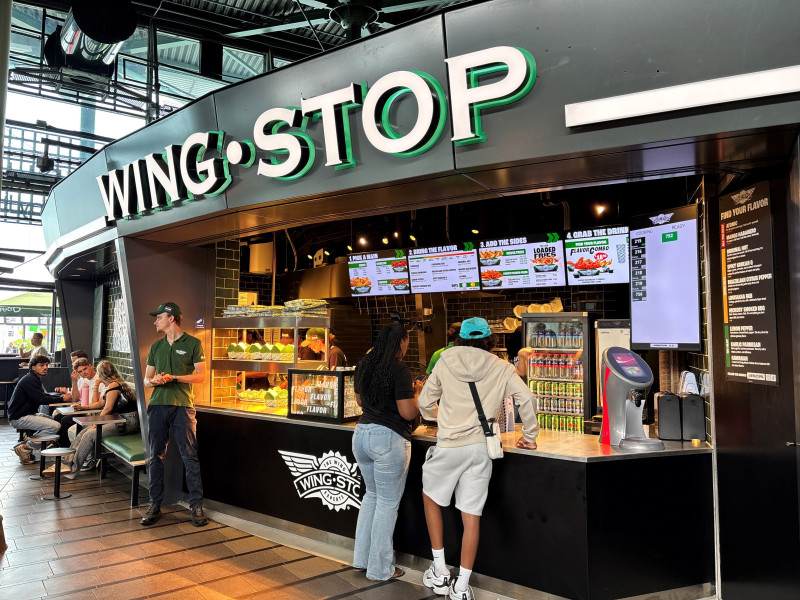
Wingstop leads on volume. It added 382 net new US restaurants in fiscal 2025, more than any other quick-service brand in QSR Magazine's ranking of net domestic unit growth (2026). Worldwide it added 493 to end the year with 3,056 units, according to its full-year 2025 results (February 2026). By June 27, 2026 it had 3,255 restaurants, 2,728 in the US and 527 abroad, according to its second-quarter 2026 release. Against a stated goal of more than 10,000 restaurants globally, about two thirds of the estate is still to be built, and part of that gap will be filled outside the US.
Dave's Hot Chicken grew its unit count by 34.3% in 2025, the fastest of the large chicken chains in the same Datassential data. It started in 2017 as a Los Angeles parking-lot pop-up funded with $900. It had 315 units when Roark Capital bought it for about $1 billion in June 2025, and it passed 400 locations worldwide by April 2026, with rights sold for more than 1,020 units, according to the International Franchise Association. Raising Cane's opened its 1,000th restaurant on Hollywood Boulevard in March 2026, on the way to a 1,600-unit target reported by Nation's Restaurant News.
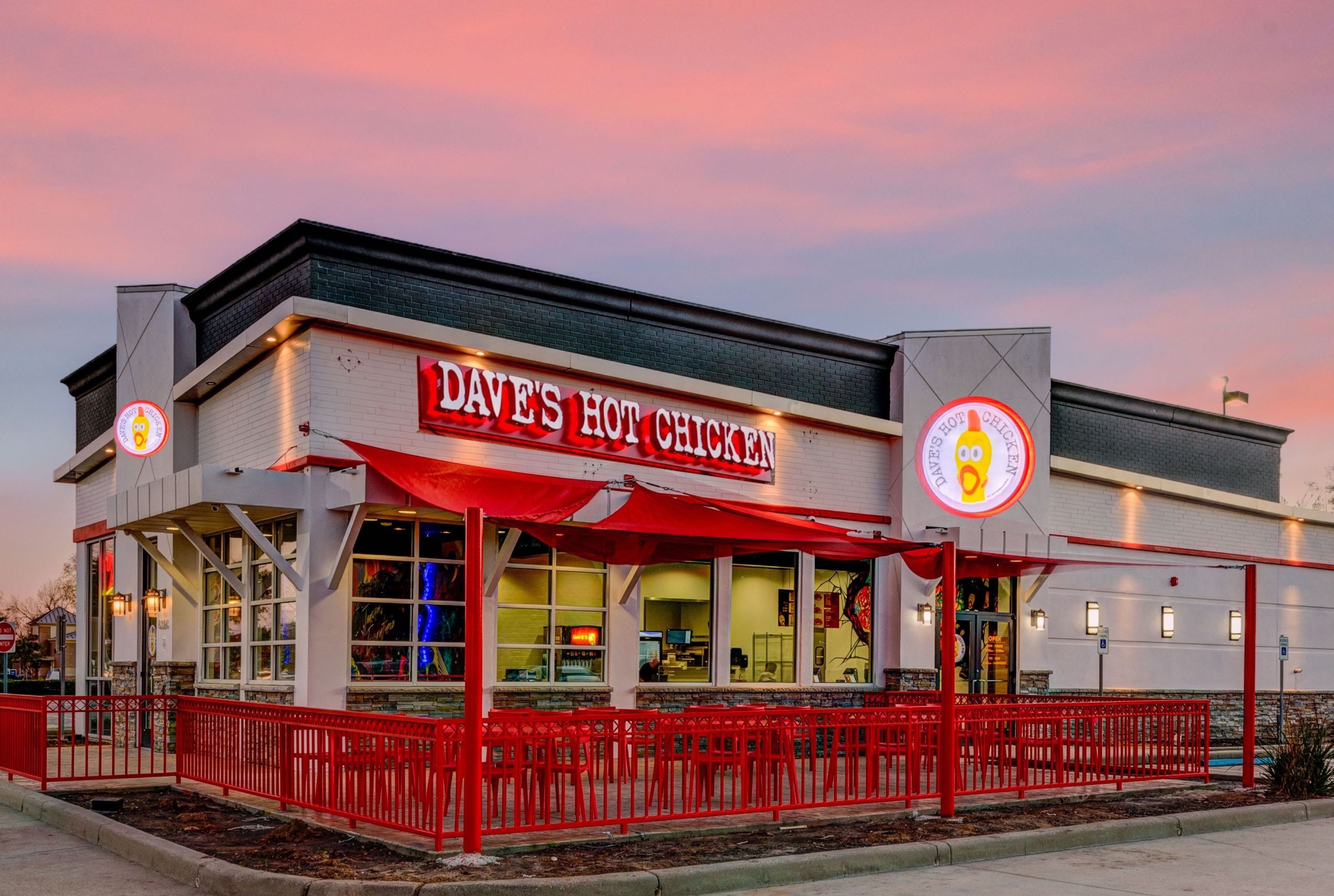
The tailwind doesn't lift every brand equally, though. Bonchon had 151 US units at the end of 2025, per Restaurant Dive (August 2026), and grew its count by 2.7% that year, well below the segment's 4.4%. A landlord should judge a chicken tenant on its own opening record, not on the category's.
2. Express car wash: new tunnels and a private equity roll-up
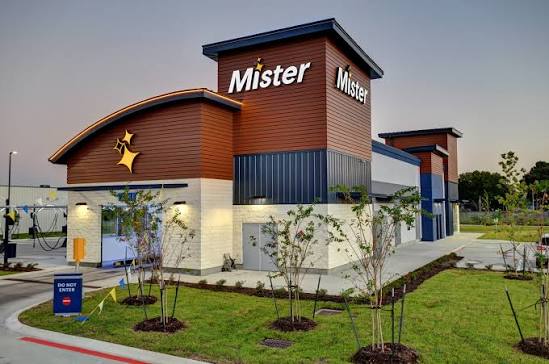
Express car washes have become one of the busiest asset classes in US suburbs, growing through new builds and acquisitions. Professional Carwashing & Detailing estimates that around 550 new express sites still open each year, down from 850 to 900 in 2023 (2025), on top of roughly 10,000 express-exterior sites nationwide. The pace has slowed, but 550 new sites on that base is still growth of about 5.5% a year, faster than chicken's 4.4%.
Most of these tunnels run on memberships. US express washes sell unlimited monthly plans, and at Mister Car Wash the 2.5 million members of its Unlimited Wash Club generated 76% of wash sales in the first quarter of 2026, according to its first-quarter 2026 results. The same release shows 493 of its 549 locations were leased, so the category grows through landlords as much as through land purchases.
Ownership has shifted faster than the site count. Private equity owned 13% of the high-volume express-exterior market, meaning sites washing more than 100,000 cars a year, in 2019 and about 25% three years later, according to Car Wash Advisory's presentation at the International Carwash Association's 2025 show. By 2025, private equity and institutional investors together owned 61%. That figure uses a broader definition, so the jump isn't strictly like-for-like, but the direction is clear.
The market is still fragmented, which keeps acquirers busy. The International Carwash Association counts around 3,000 companies running one or two tunnels, against about 200 with ten or more stores controlling over 6,000 locations between them, and those small operators are what the next round of roll-ups will buy. Whistle Express became the largest US express operator, with 530 locations across 23 states, when it closed its Take 5 Car Wash acquisition in April 2025. Leonard Green & Partners announced in February 2026 that it would take Mister private and completed the roughly $3.1 billion deal in May 2026. Quick Quack opened its 300th location in October 2025 and keeps its whole network in seven states.
Density is the next constraint. Mister's chief executive John Lai said on an earnings call that 80% of its locations have a competitor within three miles, as reported by PitchBook in February 2026. In a market that crowded, the next tunnel has to be chosen on how many members its catchment can still supply, because visibility from the road no longer sets it apart.
3. Pickleball and competitive socialising: games that need square footage
The Sports & Fitness Industry Association calls pickleball the fastest-growing sport in the US, with 24.3 million players in 2025, up 171.8% from 2022 and 22.8% on 2024, and every new player needs a court. Competitive socialising venues, which combine a game with food and drink, are turning that demand into leases. JLL's location-based entertainment report (May 2026), which covers the whole category rather than pickleball alone, counts 207 concepts operating 4,746 locations across the US and Canada. Its pipeline of 721 planned locations would add about 15% to that estate and totals 16.5 million square feet. The same report logged 217 million visits in 2025, with an average stay of 140 minutes, a dwell time few retail tenants can match.

Topgolf opened its 103rd US venue in Madison, Wisconsin, in August 2026. Nine months earlier, Leonard Green & Partners agreed to buy 60% of the business at a valuation of about $1.1 billion. Three months later the same firm agreed to buy Mister Car Wash, so one buyer is now betting on two of the five categories. Life Time, with more than 190 clubs in the US and Canada, opened its North Shore club near Chicago with 28 pickleball courts in June 2026. Taken together, these openings show the format splitting in two: destination venues that need a regional catchment, and courts added inside existing clubs. Each calls for a different kind of site.
Building the destination version is expensive. Chicken N Pickle, with 13 venues in mid-2025, paused new ground-up builds because of tariffs and construction costs and switched to growing through acquisitions. Size raises the stakes: JLL's pipeline works out at about 23,000 square feet (2,100 square metres) per planned venue, so a wrong site is expensive to get out of.
4. Cannabis dispensaries: consolidation on a patchwork map
Cannabis grows as states open and as multi-state operators fill them. Adult-use cannabis is legal in 24 states plus Washington DC. Curaleaf had 176 operated and managed US dispensaries in August 2026, according to its second-quarter 2026 results, up from 153 a year earlier in its second-quarter 2025 results. Trulieve, the other large operator, had 207 in August 2026.
Federal rules have moved only part of the way. State-licensed medical marijuana moved to Schedule III under a final rule effective April 28, 2026, which takes those sales out of the federal tax rule that stops Schedule I and II businesses deducting ordinary costs. A decision on broader rescheduling was still pending in September 2026 after a DEA hearing. Zoning, licence caps and buffer rules decide where a dispensary can open long before the catchment does, so in this category the permitted map comes first and the site analysis second.
5. Urgent care: healthcare sold on drive time
Urgent care has turned healthcare into a strip-mall format. The Urgent Care Association counts 15,101 centres in the US (January 2026), up from about 9,000 in 2016. That's growth of about 5% a year for a decade, slightly faster than chicken's 4.4%. For site selection, the figure that matters in the same data is that 89.4% of Americans now live within a 20-minute drive of an urgent care centre. New clinics therefore compete for the same households as existing ones, the way two burger chains on the same arterial road do.
The largest operators are healthcare companies rather than retailers. The 2026 Urgent Care Top 100 published by the Journal of Urgent Care Medicine (June 2026) ranks American Family Care first with 409 locations, ahead of HCA with 386 and GoHealth with 369. AFC is still opening: it reached its 400th clinic in April 2025 after launching 104 in two years, most of them run by franchisees, which makes it a franchise story as much as a healthcare one.
Walmart had a harder time. It closed all 51 of its health centres in 2024, citing reimbursement pressure and operating costs. For a landlord, the lesson is to judge a clinic tenant on its operator's model rather than on the anchor it sits next to, and to plan for a standalone or strip-centre unit that lives on its drive-time catchment.
What the fastest growing US retail categories have in common
Product still matters in these formats, as Dave's 34.3% growth suggests, but it rarely decides whether a unit works. Bonchon lagged a segment growing at 4.4%, Walmart's clinics closed while dedicated networks kept opening, and 80% of Mister's car washes trade within three miles of a rival. What separates the winners is the site: how many target households live within a short drive, how often they come back, and who else already serves them.
The common profile is a compact, repeatable box (pickleball venues aside), a catchment measured in drive time rather than walking distance, and repeat visits. In car washes those visits are now contractual, with members generating 76% of Mister's wash sales in early 2026. Chicken restaurants, clinics and dispensaries rely on habit instead of contracts, but they depend on the same thing: a site close enough to people's daily routes that coming back costs them nothing.
That's also why private equity keeps buying into these categories. Roark Capital paid about $1 billion for Dave's Hot Chicken, Leonard Green & Partners bought into Topgolf and Mister Car Wash within three months, and private equity and institutional investors now own 61% of the high-volume express wash market. A repeatable box in a predictable catchment can be copied hundreds of times. Once a market fills up, as express car washes already have in parts of the US, the operators who secured the best sites early are the hardest to displace.
Which of the five are already moving to Europe
Express car washes are furthest along on the continent. Tommy's Express, which grew out of a family car wash in Holland, Michigan, opened its first European site in Allonne, France, in 2025, and its Dutch partner BOB Autowas opened a conveyor tunnel in Utrecht in March 2026. Europe already has its own scale player in IMO Car Wash, which runs 725 tunnel washes across Europe and Australia. Driven Brands agreed to sell it to Franchise Equity Partners for €406 million in a deal announced in December 2025, so the roll-up model is already being priced on this side of the Atlantic.
Chicken has crossed too, and not only to the UK. Wingstop opened its first restaurant in the Marseille area, at Plan de Campagne, in July 2026, after sites in Paris, Lille, Toulouse-Blagnac and Argenteuil, and its UK franchisee opened its 100th UK restaurant in Inverness in August 2026. Raising Cane's has planned a London flagship at Piccadilly Circus for late 2026.
Dave's Hot Chicken's UK and Ireland franchisee, Azzurri Group, signed in September 2025 to open 180 restaurants in 10 European countries, including France, Spain, Germany and Italy. Six months later, Azzurri was reported to be exploring a sale of those rights, so the timing of the continental rollout is uncertain. For a European franchise team, that makes the rights themselves the opportunity: a 180-unit development agreement for one of the fastest-growing US chicken brands may be on the market.
Competitive socialising is established in the UK and still early on the continent. Savills (March 2026) counts more than 800 UK competitive socialising sites, up 58% since 2018, with around 1,100 forecast by 2030. The traffic also runs the other way: Puttshack was founded in London in 2018, now has its headquarters in Chicago and lists about 20 US venues (October 2026). In France, about 30,000 people play pickleball and the sport came under the French Tennis Federation in January 2026, and US operator Pickleball Kingdom appointed a European developer the same month, targeting the UK, Spain, Germany and France.
Urgent care is arriving through local formats rather than US brands. France had between 400 and 600 walk-in unscheduled care centres, with networks growing fast since Covid-19, according to an IGAS report published in February 2026. The tenant a French landlord meets will be a domestic network, so the openings to watch are French ones. Cannabis is the category that won't follow soon: Germany legalised possession and non-profit clubs in 2024 but still has no legal retail, with 455 clubs approved by August 2026.
Ranked on that evidence, express car washes and chicken are the two most likely to reach a European expansion pipeline within two years. Car washes already have Tommy's Express tunnels open in France and the Netherlands, and chicken has Wingstop trading in France plus a 180-unit plan for Dave's, even if that plan changes hands. Competitive socialising will keep growing from its UK base before it spreads, urgent care will grow through local operators rather than US brands, and cannabis won't arrive as retail on that timescale. For the US brands making the crossing, the site questions European brands face in the US apply in reverse: a catchment drawn around a suburban arterial road has to be redrawn for European towns where more customers arrive on foot.