

.jpg)
.jpeg)
.jpg)
.jpg)

Follow us on
Most expansion shortlists start the same way. A broker sends a list of available units. You visit the ones with acceptable rent. You pick the least bad option and call it a strategy.
You’re basing the biggest decision for your business, the one that has the highest impact on profitability, on whatever happened to be vacant.
The better way starts from the opposite end. Not a list of what you can rent, but a map of where your customers already are. This month we ran that process for one concept, a hypothetical luxury snack bar in London inspired by Erewhon, and went from the whole city to five streets in a single afternoon.
Start with a blank map
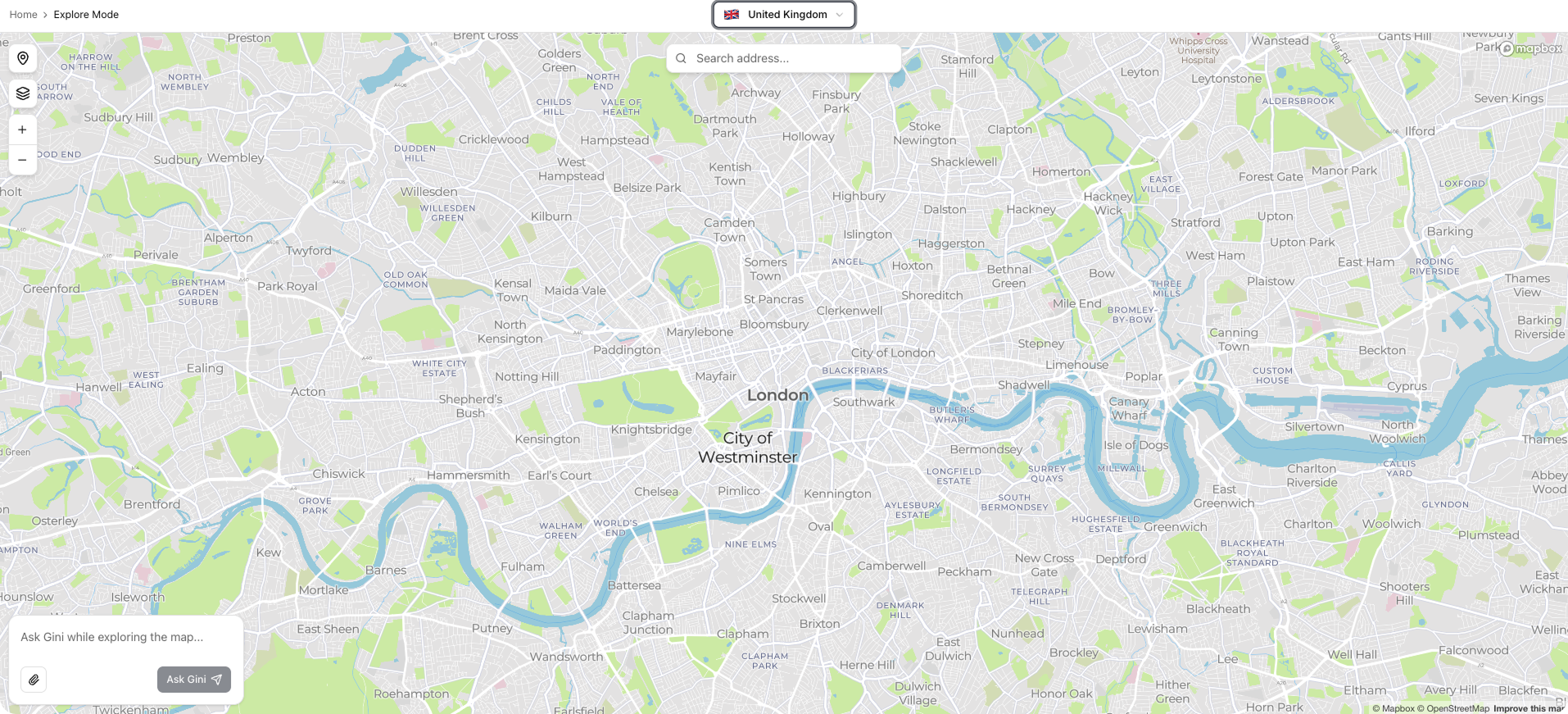
Starting with a blank map forces you to think of your customers first. Who will they be? Where do they spend their time? Where do they live, work, shop?
You can do this with an old paper map and a marker, or with a tool that does the crossing-out for you. The principle does not change. Start with what is essential for the business. If that is high-income visitors, start crossing out the districts that can't support the spend. If it is purchase intent, cross out the residential areas where nobody is shopping. What is left is where you actually look.
That is the same discipline the best operators use when they assess a single address: know your success criteria. Explore mode in Gini by MyTraffic lets you apply that discipline across an entire city (or even a whole country) at once, before you have crossed off a single street. The map above is that starting point, the whole of London with nothing ruled out yet.
Decide what good looks like
A luxury snack bar lives on two signals at once.
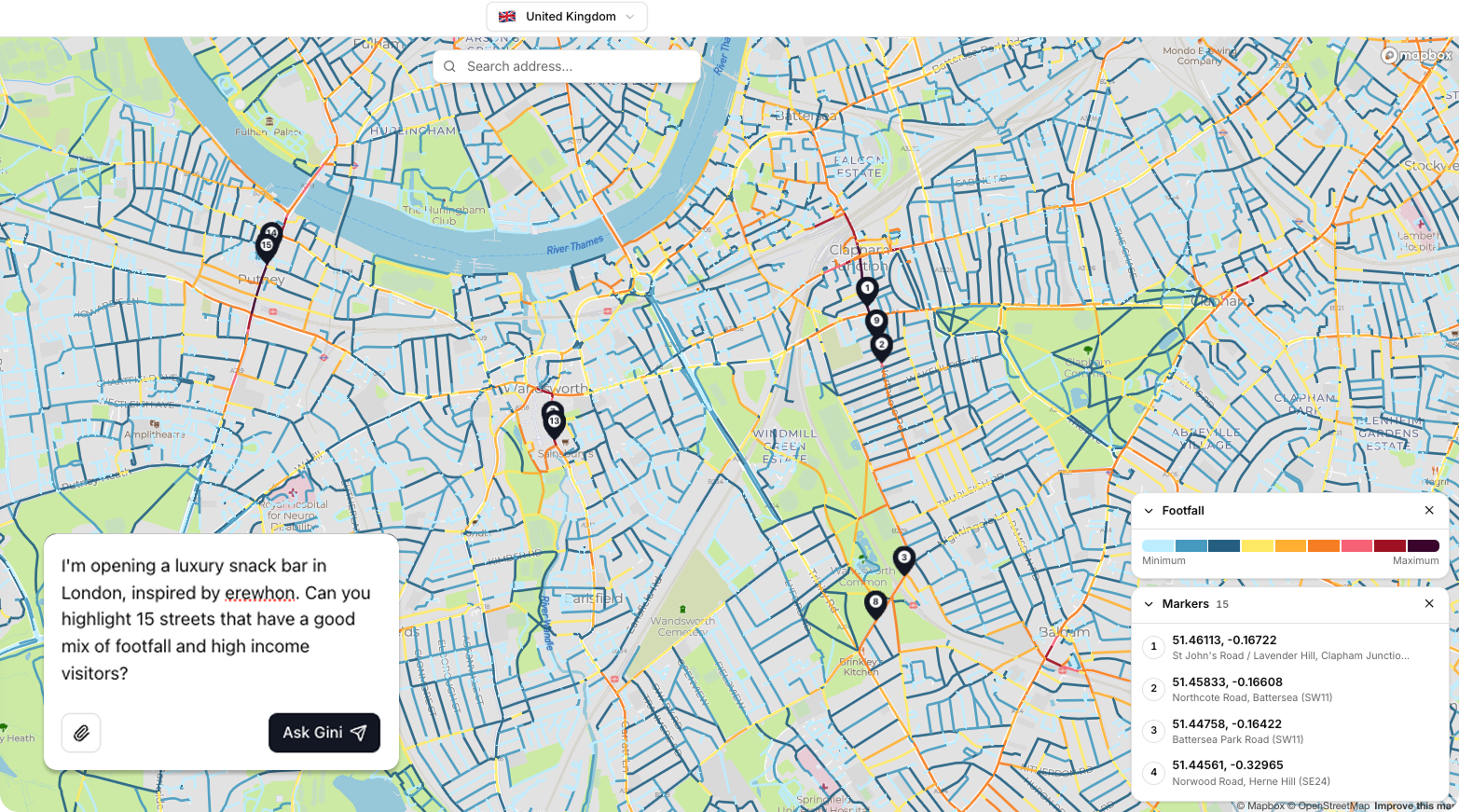
It needs enough people walking past to fill the room, and it needs those people to be the kind who will pay fifteen pounds for a smoothie without thinking about it. Footfall on its own points you to a commuter corridor where nobody stops. Income on its own points you to a quiet residential street with no passing trade. The concept only works where both show up in the same place, and that overlap is rarer than it sounds.
So that is what you ask for. In the screenshot above, the question is plain: a luxury snack bar inspired by Erewhon, show me fifteen London streets with a strong mix of footfall and high-income visitors. The map answers by adding pins at relevant points.
Refine by the signal your concept lives on
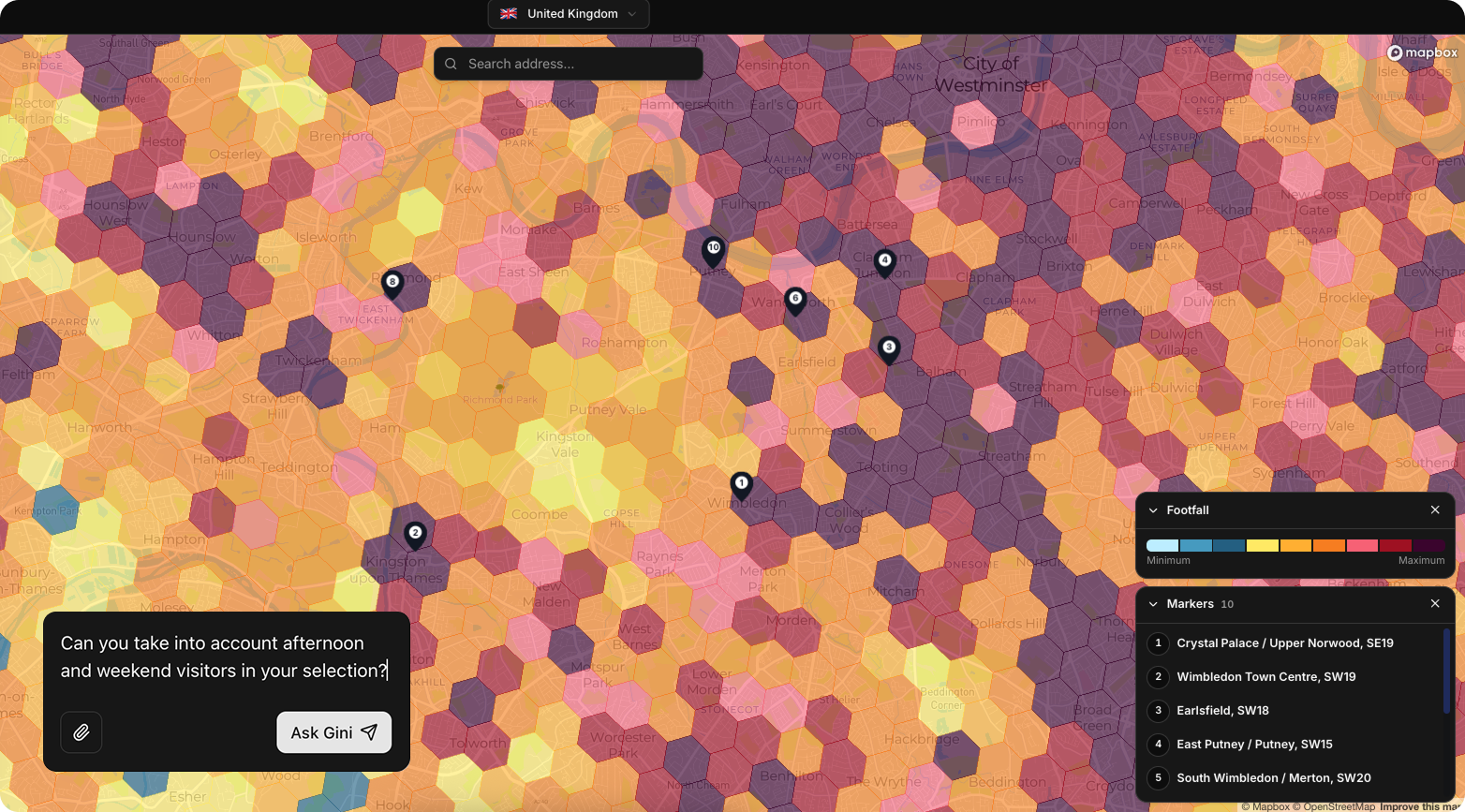
However, only looking for two signals in a city as big as London will result in a long list, not a shortlist. To cut it down, keep adding signals that matter for your business, and for a snack bar that signal is timing.
Total footfall hides a trap. A street that runs hot at 8am is full of commuters racing to the Tube, and a snack bar is not a grab-and-go business. It is a dwell business. People come to sit, to be seen, to spend forty minutes and a lot of money. That happens in the afternoon and at the weekend, not in the morning rush.
So the number that matters most here is not how busy a street is, but when it is.
This process of refining signals and criteria until you find your ideal location is the key to finding the best possible location for your business. Not every business will look for the same criteria, and that’s where doing market research, meeting industry experts and business owners will help you make wiser decisions.
The top five, in one afternoon
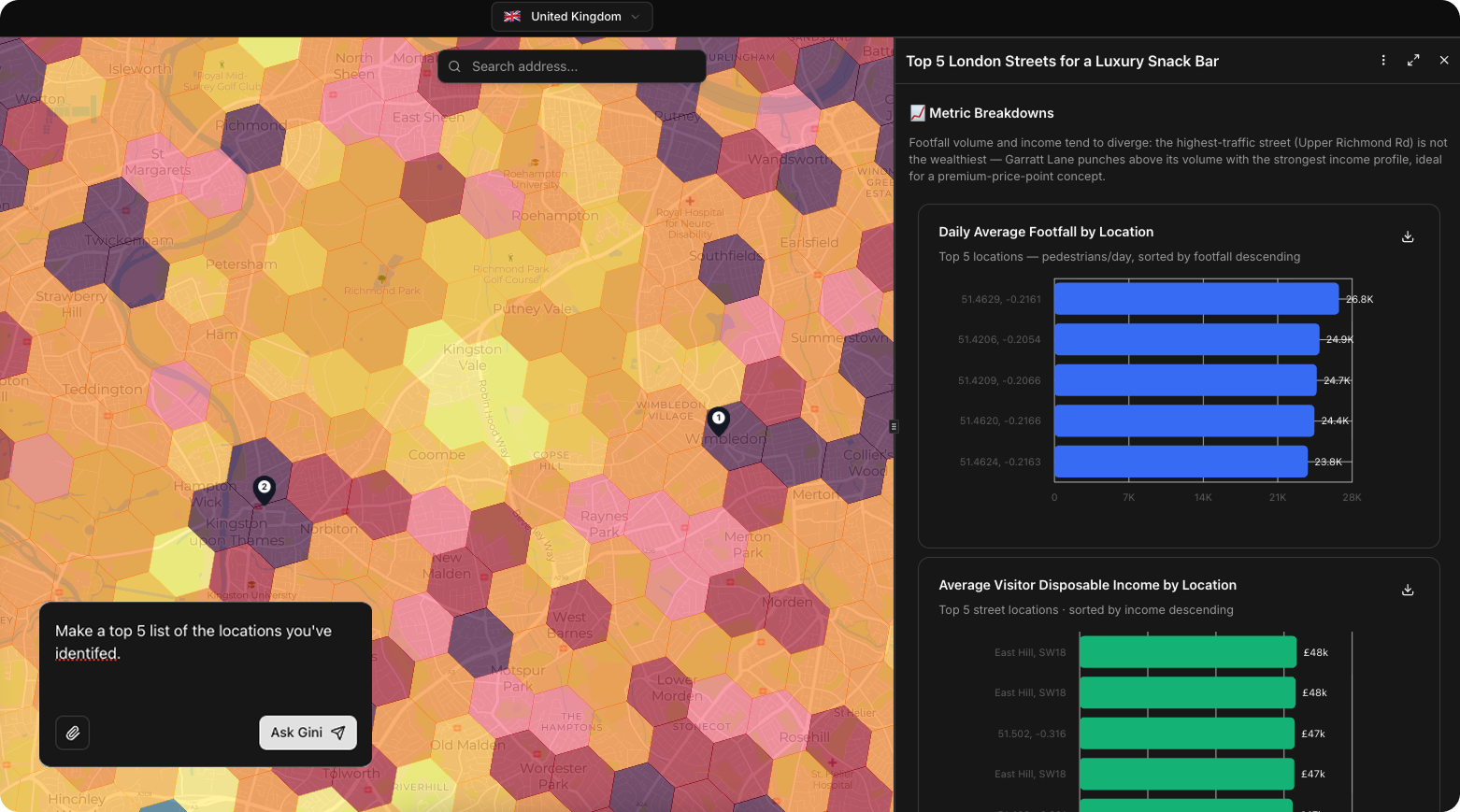
Once you’re done creating, fine-tuning your model and crossing out areas that aren’t fit for your business, then you have your shortlist!
In the screenshot above, the five strongest streets come back ranked, each carrying the footfall, income, and afternoon-traffic profile that are what I was looking for: Westow Street, Wimbledon Hill road, Garratt Lane, Upper Richmond Road and South Wimbledon Road.
What started as the whole of London is now five streets, and we did it together in just an hour!
The five are a starting point, not a signature.
The next step is the one we keep coming back to in this newsletter: take each address and check it properly, footfall rhythm, catchment, demographics, who else trades on the street, before anyone goes near a lease. The map finds the candidates. The full site analysis confirms the winner. The difference is that you are validating five streets you chose on purpose, instead of three units someone else had going spare.
TL;DR
Every address has a DNA. Some are built to win.
The five streets on that London shortlist were not picked because they were available. They were picked because they match one specific business down to the hour of the day its customers show up.
That is what starting from the map gets you. The shortlist is built around the concept, not around whatever happened to be vacant.
That shift, from a list of what you can rent to a map of where your customers are, is the whole point of Explore mode. Open a city, describe what you're looking for, and the map answers.
Try Explore mode free, or book a walkthrough and we'll build your first shortlist with you.
Ask Gini. The map is already waiting.