





Follow us on
Every week brings another headline about a retailer going into receivership. The numbers tell a different story. In 2025, online sales made up 12% of French retail sales of goods, according to Fevad's annual e-commerce review. Almost all of the other 88% still happened in physical stores.
Physical retail isn't dying.
It's moving, and footfall data shows where physical retail trends are heading, often months before revenue confirms it.
I have retail in my blood. My great-grandfather, my grandfather and my father all ran Monoprix stores. I started my own career on the shop floor, as a department manager and then deputy store manager in Paris and Lebanon, before joining Monoprix's head office data team. Today, as CMO of MyTraffic, I watch pedestrian and vehicle flows across Europe every day. I recently talked through what those flows reveal on the Les Digital Doers podcast. These are the five physical retail trends that stand out in 2026:
- Shoppers stay closer to home, and store formats follow them.
- City centre footfall holds up where cities invested in walking, cycling and public transport.
- Pets, wellness and sport are driving new openings.
- Retail fads open faster than they last.
- Footfall data now guides the whole life of a store, from opening to marketing.
1. Shoppers stay closer to home, and store formats follow them

Our data shows customers travel less than before 2020 and shop closer to home. Remote work broke the daily commute between the suburbs and the city centre. Mobility policies and rising fuel prices then turned every car trip into a calculated decision. Both changes hit large stores on the edge of town hardest, because their model assumes people will drive to them.
IKEA shows how a brand can respond. The classic blue box on the ring road was built for a weekend outing: a huge car park, a restaurant, a play area, a whole afternoon on site. When we analysed IKEA's 15 most recent openings in Europe, the model had changed. The new stores are smaller and sit in or near city centres. Customers browse for an hour or two, then order for delivery.
Decathlon made the same move with its Decathlon City stores. We worked with their team on the range for each one, because two city-centre catchment areas a few kilometres apart rarely want the same mix of ski, running and cycling gear.
The lesson for any expansion team: the key success factors behind your existing stores were set when customers moved differently. Check them against today's flows before you copy them to the next town.
2. City centre footfall holds up where cities invested in walking, cycling and public transport

City centres that made it easy to arrive without a car kept their visitors. Those that still depend on the car lost them as fuel got more expensive. In a recent MyTraffic analysis, we compared footfall in about 30 French city centres with each city's mobility policy, and the correlation was clear. Grenoble city centre footfall has grown 21.3% in 4 years following their investment in pedestrianisation. Paris and Marseille show the same pattern.
This cuts against a fear I hear every week. When Rue de Rivoli in Paris was turned into a wide cycle lane, many retailers on the street predicted their customers would disappear.
However, a review by transport researcher Carmen Hass-Klau, cited by researchers at the University of the West of England, found pedestrian flows rose by 18% to 92% after pedestrianisation schemes in the UK and Germany, and that retailers who opposed schemes often accepted them once the effects were visible.
Montpellier is the clearest recent case. The metropolis made public transport free for all residents in December 2023, after starting with weekends. Ridership rose 33% between 2019 and 2024. In our data, city centre footfall jumped by around 20% within six months, and spending, which tells you the new visitors came to buy. Smaller towns are acting too. Alès renovated its covered market, Les Halles de l'Abbaye, to win back residents of the outskirts who had stopped coming into town, and its centre gained around 20% in footfall over two years.
3. Pets, wellness and sport are driving retail expansion in Europe
The brands asking us for location data in 2026 give us an early read on where retail growth is coming from. At MAPIC 2025 in Cannes, the retail real estate fair where we have a stand every year, the visitors to our stand looked like a map of the market.
Pet care leads. Chains such as Animalis and Maxi Zoo are opening stores at pace, and the Spanish chain Tiendanimal reached its 30th store in Portugal in 2025. Households fight over cents on their own groceries, but they protect what they spend on their animals, which makes pet care one of the safer bets for a landlord or a franchisee. The category grew for years in the US and is now arriving in force in Europe.
Behind pets comes wellness. Two contrast therapy venues, where clients alternate between saunas and cold baths, opened in Paris in the past six months. Pilates studios keep multiplying. Some of these concepts ask us where in France they could open before they've even entered the market.
Sport and leisure complete the picture. We get a steady flow of requests for padel court sites across France and Europe. Hyrox, a race format that alternates eight 1 km runs with functional workout stations, is spawning its own gyms. Immersive leisure, from trampoline parks to digital art experiences, is moving into shopping centres.
None of these concepts struggle to find customers. Their fight is for square metres: the right unit, in the right place, at an effort rate (rent as a share of revenue) the business can carry.
4. Retail fads open faster than they last
A trend can fill a street with new shopfronts in two years and empty it in five. We saw it with cookie shops and single-product focaccia concepts: a lot of marketing buzz, no lasting value proposition, then decline once the novelty wore off.
Today's version is Crousty fried chicken, pushed by TikTok. I get an inbound request from a new crispy chicken brand roughly every two weeks. The good ones all ask the same question: how do we avoid opening too fast for demand that might fade? It's the right question, because a store can cost several million euros in CAPEX. For a small network, one bad location decision can sink the company. Social media buzz does move store visits, but buzz alone doesn't keep a store open long term.

Shein at BHV Le Marais showed how fast buzz can turn. When Shein opened inside the Paris department store in November 2025, footfall jumped 11.8% in the first week. By December, BHV's footfall was down 6.5% year on year, more than three times the decline at comparable Paris department stores. Seven months after the opening, BHV ended the partnership.
That's what footfall data gives a fast-growing concept before it signs its next lease. Do visits hold once the launch weeks are over? Does the store keep drawing people from the same distance, or does it start living off passers-by on its own street? A concept that passes both tests has found a format. One that doesn't is riding a fad. It's also the line between this shift and the last one: pet care and wellness answer a habit people keep every week, while a single-product snack answers a craving that moves on.
The brands that stay ahead tend to do one simple thing very consistently. Five Guys spends almost nothing on advertising. I spent a full day in their restaurants, and everything, from the hand-cut fries to the hand-formed patties, is prepared on site each morning. Their customers come back again and again. Avril, the organic cosmetics brand, never runs promotions: one fair price, everywhere, all year, in a sector where constant discounts have stopped meaning anything.
Neither brand needed footfall data to find its recipe. Both use it to put that recipe in the right places.
5. Footfall data now guides the whole life of a store
Most brands first use footfall data to choose a location. The bigger payoff comes after the opening, when the same data explains why a store performs, what it should sell and where its next customers live.
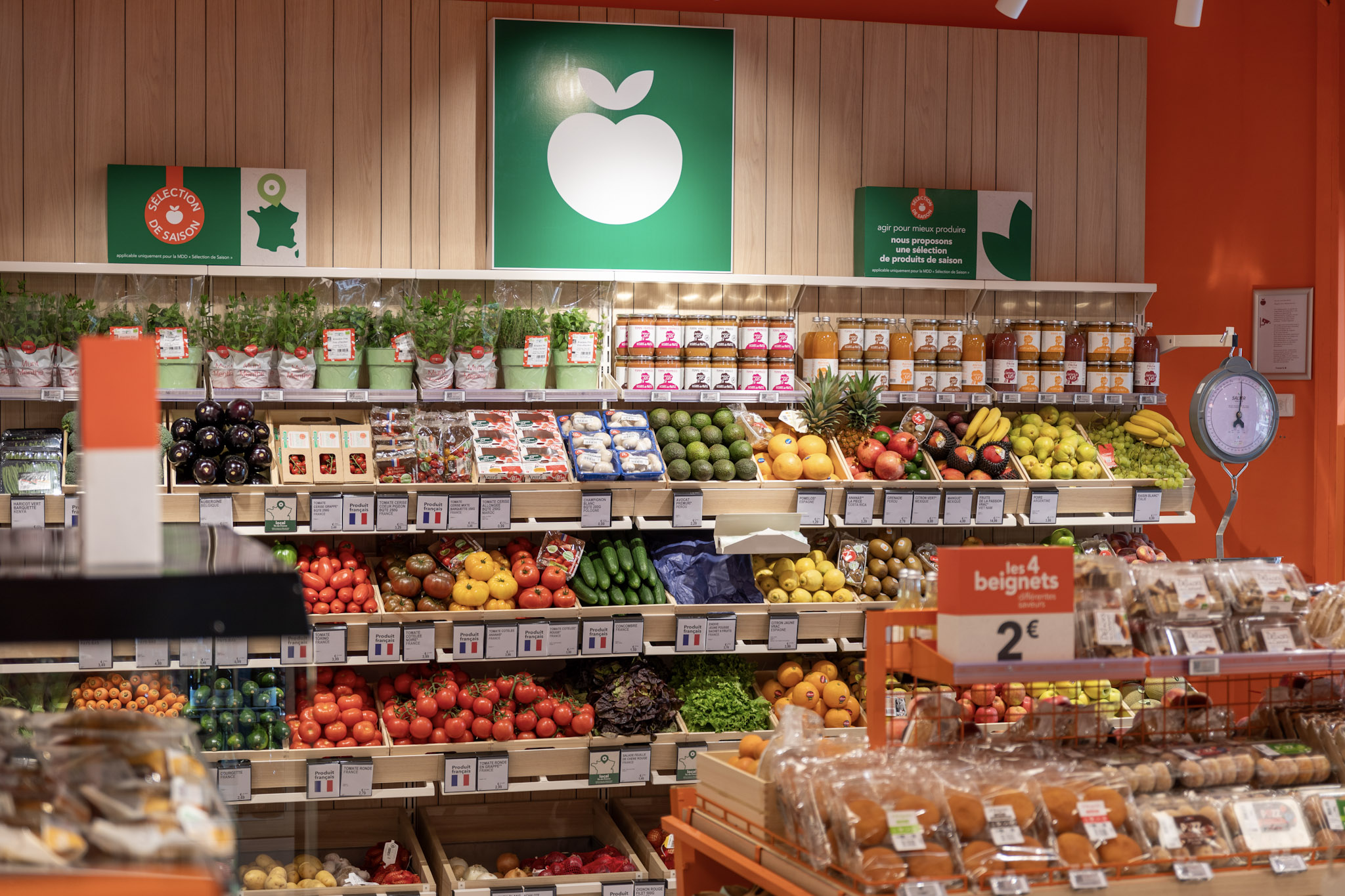
Franprix uses MyTraffic to monitor its whole network, franchised stores included. One store had underperformed for years, and the franchisee blamed roadworks and falling traffic. Franprix compared it with stores that had the same traffic, the same visitor spending power and the same mix of residents and tourists. The problem was the offer. The catchment area wanted services, so Franprix added a bakery corner, a rotisserie and parcel lockers, which helped boost the store again.
Marketing is the third use. If a store draws almost no visitors from beyond 15 minutes away, even where residents match its best customers, those areas are untapped potential. Some of our clients now run Meta and drive-to-store campaigns targeted at those exact areas, then compare visitor origin before and after to see whether the campaign brought people in. With marketing budgets under pressure across retail, that before-and-after proof matters.
Access is changing too. Location data used to mean logging into a platform and knowing how to read the charts, which a store manager at the end of a shift has neither time nor energy for. Gini by MyTraffic lets anyone ask a question in plain language and get an answer in seconds, from a phone between two meetings if needed. A two-store franchisee now has the same footfall intelligence as a national expansion team.
Why I'm optimistic about physical retail
Physical retail in France and Europe is changing shape, and the demand behind it is growing. I see it in the requests that reach MyTraffic every day. US e-commerce brands in eyewear and medical apparel are preparing their European entry. Established chains are looking at fast-growing markets such as Poland, where rising incomes are drawing Western European brands. And first-time franchisees keep bringing projects for bakeries, madeleine shops and restaurants. There is turnover, as there always has been, but the appetite to open is intact.
The five physical retail trends above share one lesson: customers change their routes before they change their spending. The brands and cities that watch footfall see that change first, and they get to act on it while others are still reading last quarter's revenue.
Want to see how footfall is moving around your stores or your city centre? Ask Gini by MyTraffic for free, or watch the full Les Digital Doers episode for the whole conversation.
Frequently asked questions
Is physical retail declining in Europe?
No. In France, the market with the clearest data, online sales made up 12% of retail sales of goods in 2025, according to Fevad, so 88% still happened in stores. What is changing is where people shop. Footfall data shows customers staying closer to home and favouring city centres they can reach without a car.
What is footfall data?
Footfall data measures how many people pass by or visit a place, when they come and where they come from. Retailers, landlords and cities use it to compare locations, track store performance and spot changes in demand.
How does MyTraffic collect footfall data?
Pedestrian data comes from consented location signals shared by thousands of mobile apps across Europe, which MyTraffic aggregates and extrapolates. Vehicle flows come from car manufacturers' connected-car data. Both are refreshed daily and available for any address, unlike sensors that only count people at one entrance.
Does pedestrianisation hurt city centre retail?
The evidence says rarely. MyTraffic's analysis of about 30 French city centres found footfall stable or rising where cities invested in walking, cycling and transit. A review by Carmen Hass-Klau, cited by University of the West of England researchers, found pedestrian flows rose by 18% to 92% after streets in the UK and Germany closed to traffic.
How can footfall data help choose a store location?
Start with your best stores: measure their traffic, visitor profile and catchment area to define your success factors. Then search for areas that match that profile, and check that the flow is qualified, meaning people who come to spend. Finally, compare the expected revenue with the rent before you sign.